The Beauty and the Machine, Joining Aesthetics and Robotics in Education – 2
We are investigating the interplay between aesthetics and robotics to enhance motivation and skills in digital education.
Duration: January 2025 – December 2025
Status: Completed
Educational Level: Primary Level, Tertiary Level
Topic: Digital Skills & Literacy, Digital Tools
Keywords: Robotics, Aesthetics, STEAM, Arts, Teaching
Initial Situation
Digital skills are essential in education and will become even more important in the future. Educational robots can support the development of these skills by bringing high motivation, transversal skills and interdisciplinary topics to pupils. Despite these key elements, educational robots are still not common in classes because (future) teachers often do not feel connected to this technology or confident enough to integrate it into their teaching. There has been a lot of research that wants to change this. However, there is a lack of research regarding the potentials of combining aesthetics and robotics. Studies have shown that aesthetics can lead to positive emotions which have a huge potential to increase the integration of educational robots in schools, especially among (future) female teachers. Our research project has addressed this specific research gap with the following research question: To what extent does the combination of robotics and aesthetics influence preservice teachers’ motivation to integrate educational robots into their digital education lessons, specifically via positive emotions? In an experimental study, we investigated preservice teachers’ shift in motivation and skills regarding the use of educational robots after applying an aesthetic approach.
Previous Project
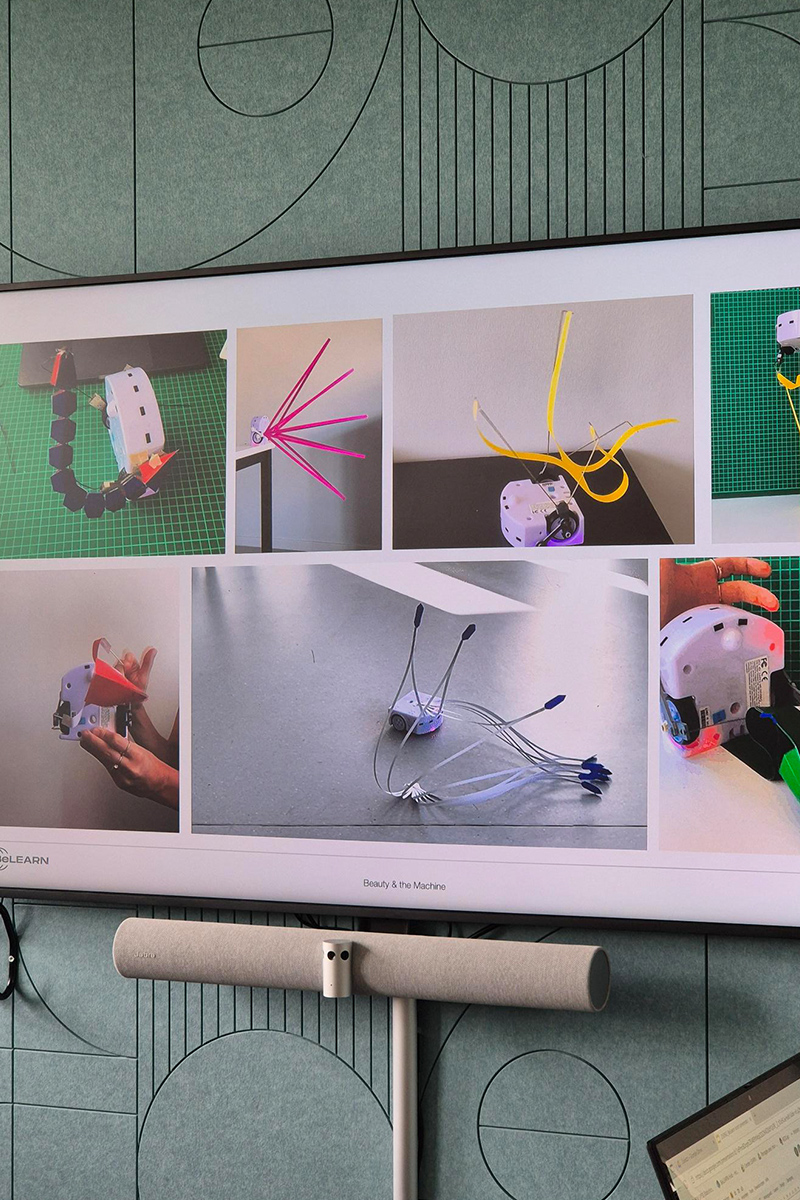
The Beauty and the Machine – 2 builds on the exploratory phase in 2024 of the preceding project The Beauty and the Machine – 1, which investigated how aesthetic costumes for the Thymio robot influence the motivation and skills of prospective teachers in working with educational robots.
Follow-up Project
In the follow-up project The Beauty and the Machine – 3, the findings will be further explored through three studies: qualitative interviews to analyse motivation, an experimental design involving practising teachers, and an exploratory study on the effects on primary school pupils.
Objectives
Our objective was to have validated educational materials that help to foster preservice teachers’ digital motivation and skills. The materials would build on scientific findings which hold information about the specific factors that increase motivation and skills and adopt the benefits of combining aesthetics and robotics (e.g., more positive emotions). We further aimed at disseminating our educational materials widely through targeted project communication, both internally and externally.
Method
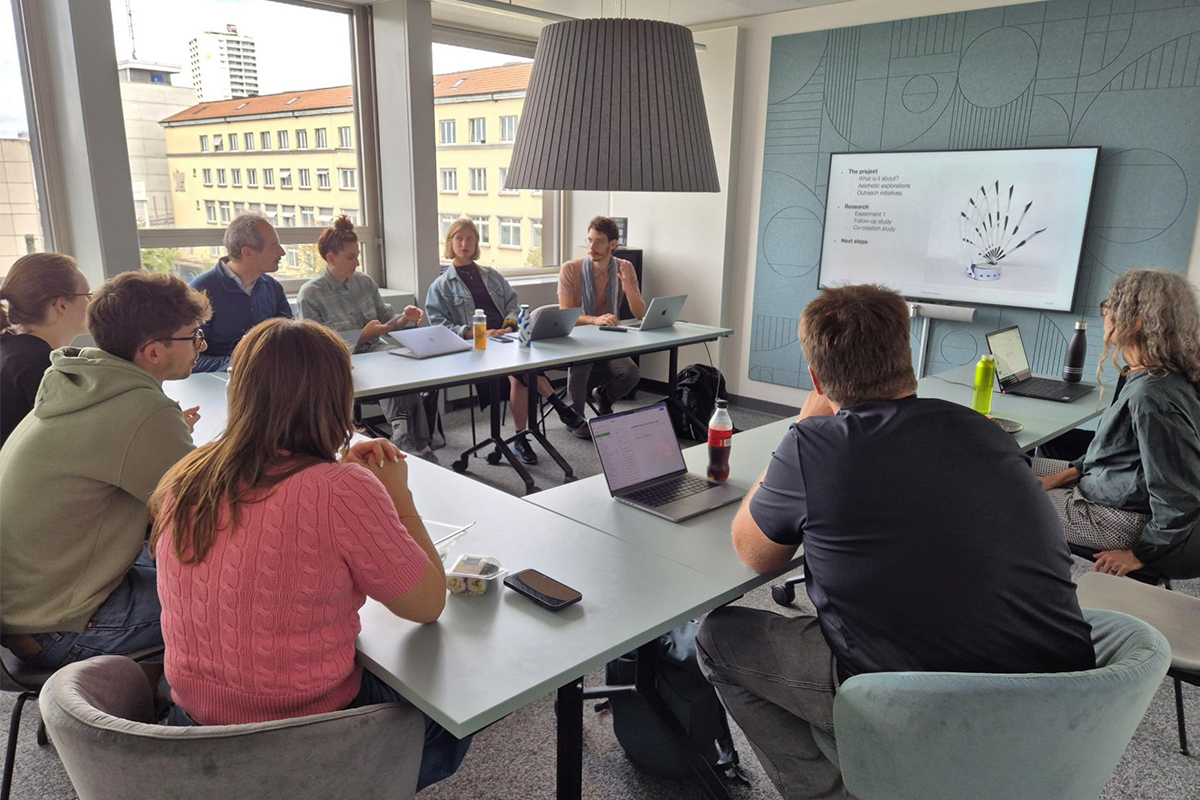
In the spring semester of 2025, we replicated the 2024 exploratory study with an overall improved design. We investigated preservice teachers’ shift in motivation and skills regarding the use of educational robots, applying an aesthetic approach. Study participants were students from PHBern. As part of the improved design, the study included a workshop which took place across 2 sessions, applied an improved costume, and used less challenging tasks. The study was based on an increased number of participants and included three measurement points to enhance study validity.
Results
The spring semester study yielded results that were contrary to our hypothesis. We assumed that the combination of educational robotics and aesthetics increases preservice teachers’ motivation to integrate robots into their teaching. For most of the motivational variables, the differences between control group (interacted with blank Thymio robots, no storytelling elements) and treatment group (Thymio robots with an aesthetic add-on and storytelling elements) were either not significant or the control group had higher values in motivation. For example, the treatment group had a smaller increase of positive emotions over the course of the workshop compared to the control group. Regarding robotics teaching self-efficacy beliefs, there was no difference between groups, with results showing a group-unspecific increase over time.
Implemented Translation
Due to the unexpected results, we have not yet integrated project results into educational practice. We plan to disseminate educational materials that adopt the benefits of combining educational robots with aesthetics after the conduction of the 2026 experiment with in-service teachers which hopefully sheds some light into the unexpected results from preservice teachers. By study design, the project has nonetheless already impacted educational practice: Preservice teachers received an introduction to educational robots in general and specifically to the Thymio robot. Both the control group and treatment group improved in various motivational aspects relating to the use of educational robots in teaching. The preservice teachers who participated in the spring semester study received an introduction to educational robots and the educational robot Thymio. They learned about alternative ways of teaching robotics. In various motivational aspects, preservice teachers from both the control and treatment groups benefited from the workshop.
We also expect some impact in the future. For the pupils, we expect that they will benefit from the teachers’ introduction to educational robots and Thymio. Thanks to the detailed project documentation which provides helpful information about how to conduct an experiment with educational robots among preservice teachers, we also expect to have an impact on future research projects with similar research goals.
- Project website with activities and tutorials