Pediatrust: An AI-powered immersive trust-building learning system for pediatric education
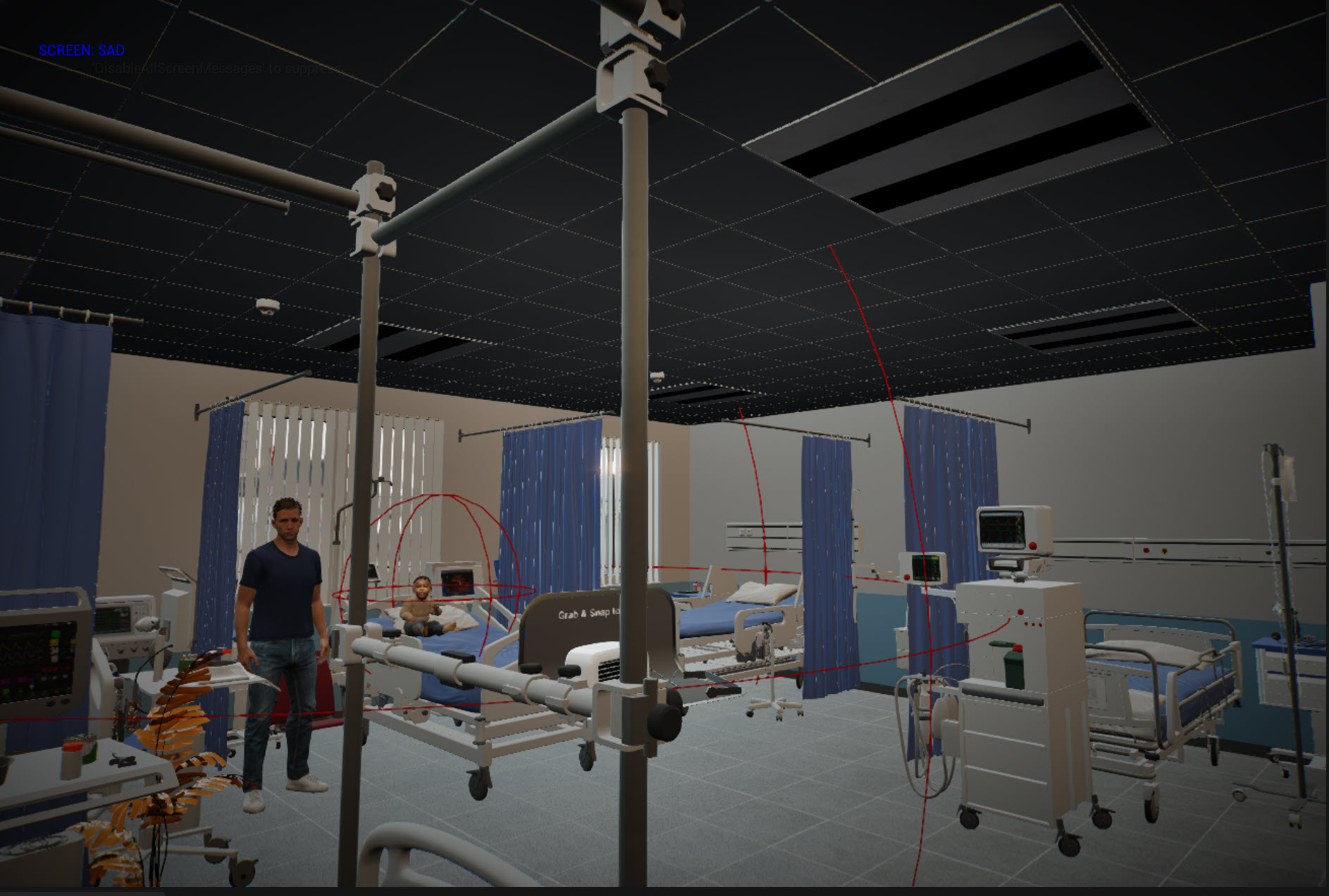
Pediatrust combines VR and AI to teach clinicians to build trust with frightened children through realistic, feedback-driven pediatric scenarios.
Duration: 1 September 2026 – 30 November 2027
Status: Ongoing
Education level: Special Needs Education; Tertiary Level
BeLEARN topic: Digital Tools; Digital Skills
Keywords: Virtual reality; key skills; trust-building; pediatric care; AI
Initial situation
Key skills such as communication, empathy, rapport-building and emotional regulation are essential for high-quality medical care, yet they remain difficult to teach, practise and assess in traditional curricula. Opportunities to develop these competencies are often limited to observation, informal role-modelling and inconsistent workplace exposure. This gap is especially critical in pediatrics, where fear and anxiety frequently lead to resistance and limited cooperation during examinations, complicating assessment and potentially delaying diagnosis. The ability to recognize and respond to a child’s emotional state is therefore central to building trust, enabling cooperation and supporting accurate clinical decision-making. Despite their importance, these skills are rarely taught systematically; trainees typically acquire them through unstructured experience rather than evidence-based training. Traditional formats such as lectures, reading and occasional role-play introduce concepts but offer little repeated, standardized, feedback-driven practice. Consequently, many early-career physicians feel underprepared for anxious or uncooperative children, even though procedural distress occurs in up to 80% of pediatric encounters. Current VR applications in medical education primarily focus on technical skills, with limited use of interpersonal and emotional competencies. PediaTrust addresses this gap by operationalizing the Fear-to-Trust framework in an interactive VR training system.
Objectives
PediaTrust aims to create an immersive, curriculum-aligned VR training program that teaches trust-building with frightened children. Specifically, it will: (1) formalize trust-building as a teachable competence by operationalizing the Fear-to-Trust framework into a VR-compatible competency model; (2) translate this model into an interactive VR module where learners practise with responsive virtual pediatric patients and caregivers; and (3) generate preliminary evidence on feasibility, realism and educational value through pilot studies with medical students, residents and early-career physicians.
Method
The project uses an iterative, mixed-methods design combining co-design, VR development and pilot evaluation. Clinicians, educators, parents and child representatives will co-create realistic scenarios and translate the Fear-to-Trust framework into teachable simulation elements. A VR training module will be built in a real-time 3D engine with interactive avatars, emotion-driven child behaviour and LLM-supported parent dialogue. Interaction logging will capture learner behaviour for feedback and analysis. Pilot studies with approximately 20–30 medical students and early-career physicians at the University of Bern and Inselspital will assess usability, realism, engagement and perceived educational value using pre/post self-assessments, interaction metrics and thematic analysis of interviews.
Planned translation
Pediatrust is designed as a practical training solution for formal and continuing medical education, not just a research prototype. Outputs include a VR clinician training module, an evidence-based framework for teaching trust-building with frightened children, and pilot data on usability and educational value. End users will be involved throughout co-design, prototyping and pilot testing. In collaboration with the University of Bern and Inselspital, the module will be tested and refined in authentic teaching and clinical training environments. Pilot results will guide integration into communication skills courses and simulation-based teaching. Dissemination will take place through workshops, stakeholder presentations, and publications in medical education journals and conferences.
Expected impact
Pediatrust is expected to strengthen pediatric communication training with a scalable, repeatable VR tool. It should improve learners’ confidence and competence in recognizing fear, regulating interactions and guiding children from distress towards cooperation. Early evidence on VR’s feasibility and educational value for interpersonal skills in pediatrics will come from pre/post self-assessments using a Fear-to-Trust rubric, usability and realism ratings, interaction metrics and thematic analysis of learner interviews. Longer-term impact will be tracked through integration into communication curricula and simulation-based teaching.