This was Translation 2026
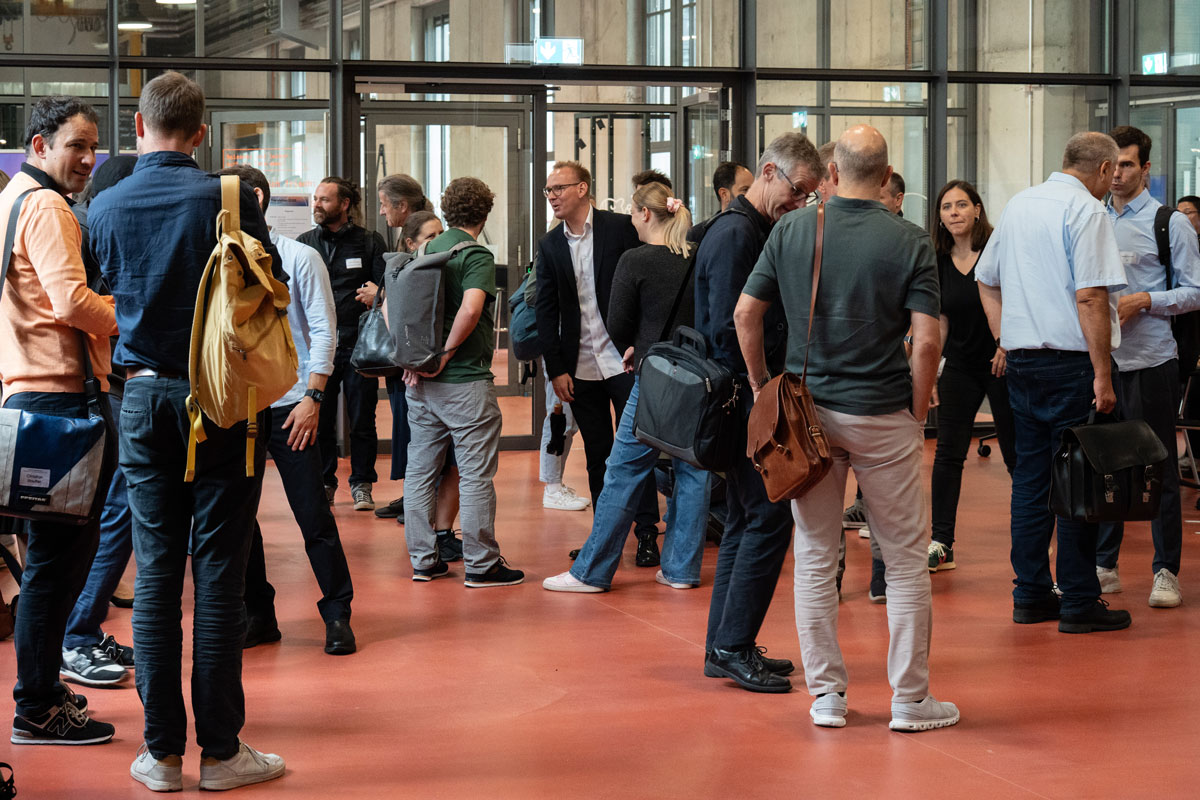
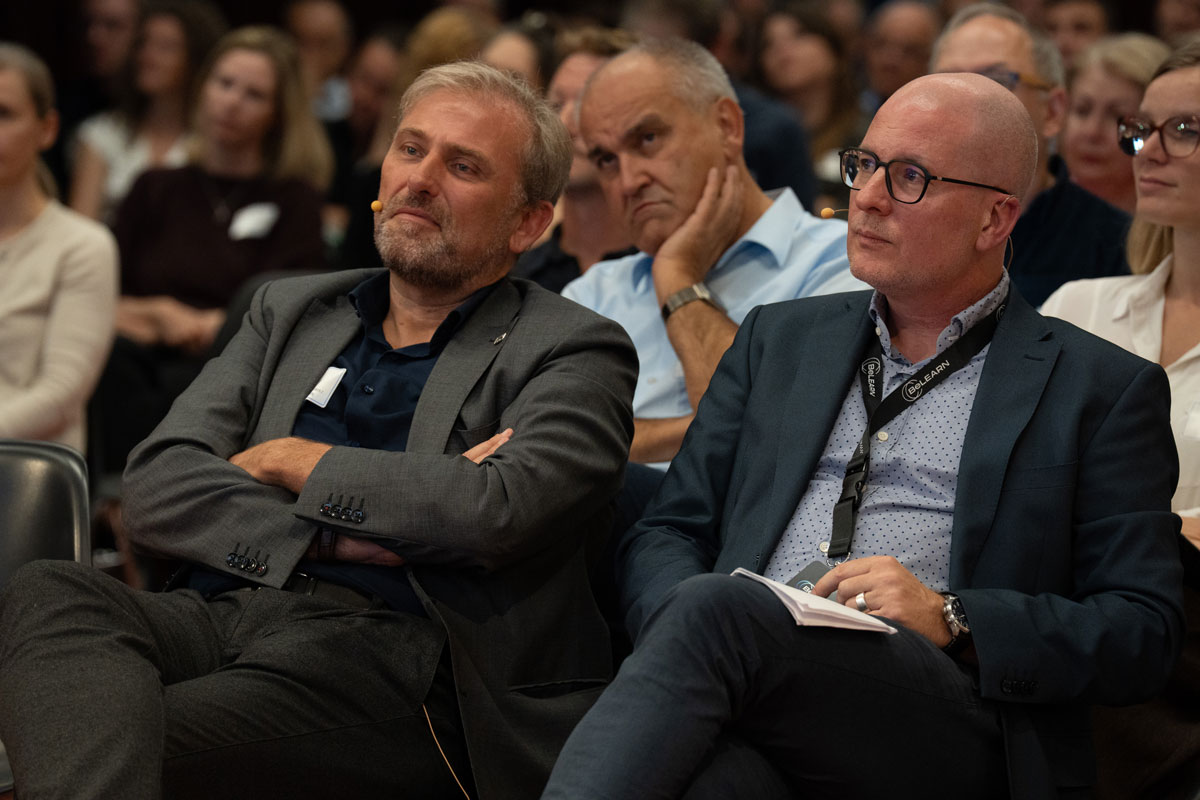
In the inspiring industrial setting of Campus Bernapark at the School of Design Bern and Biel, the second edition of the BeLEARN conference «Translation» took place on 9 September 2026. More than 160 participants from twelve cantons came together to exchange perspectives from educational practice, research, politics, public administration and the EdTech sector on current issues surrounding digital transformation in education.
Designing Education
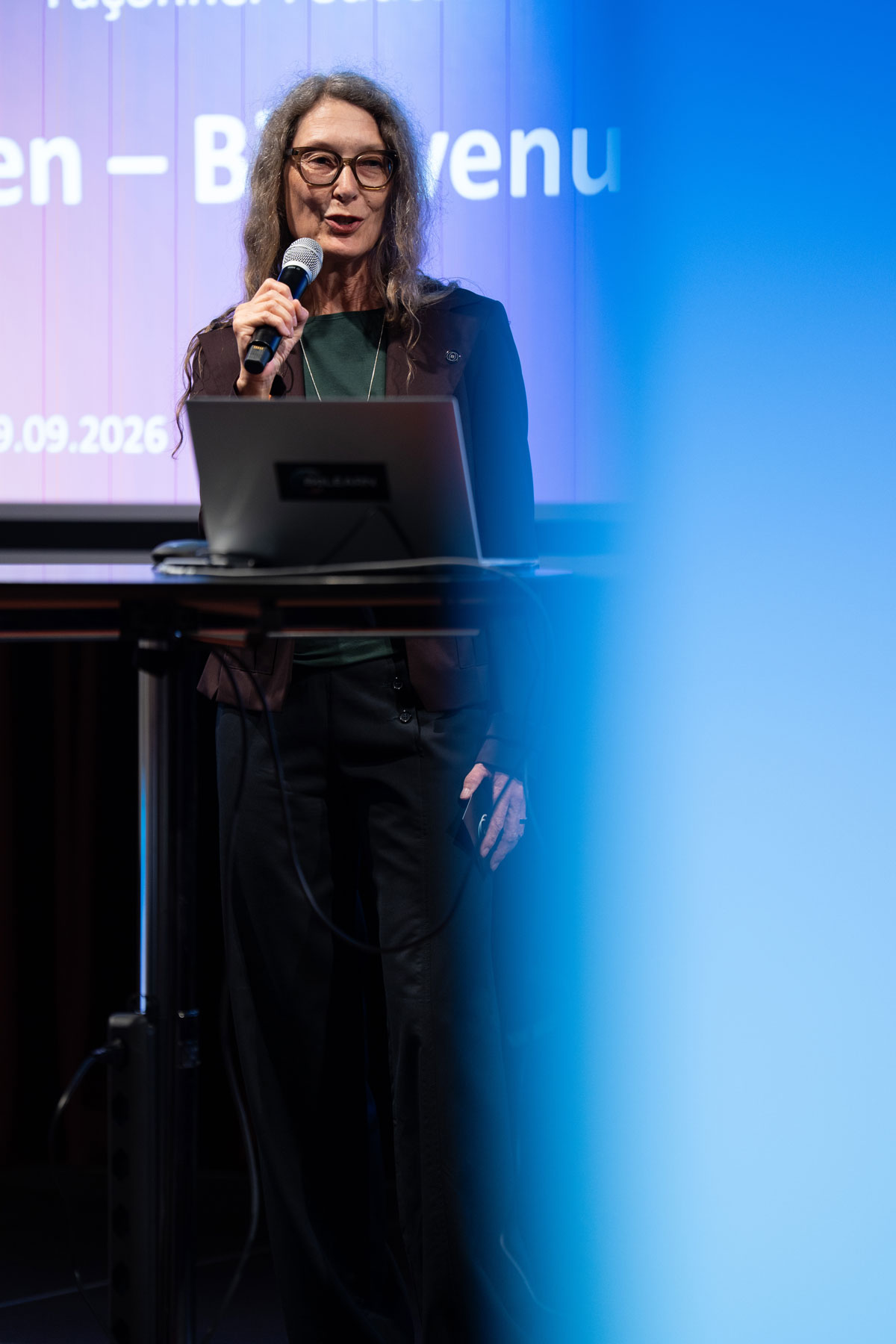
Christina Opper, Vice Director of the School of Design Bern and Biel, Fritz Sager, President of BeLEARN and Vice-Rector for Teaching at the University of Bern, and Jean-Daniel Roth, CEO of BeLEARN, opened the conference. Fritz Sager emphasised BeLEARN’s role as a connecting force, building short bridges between people from educational practice, research, politics, public administration and business, thereby fostering direct exchange and collaboration.
Shaping learning spaces with scepticism, courage and tenderness
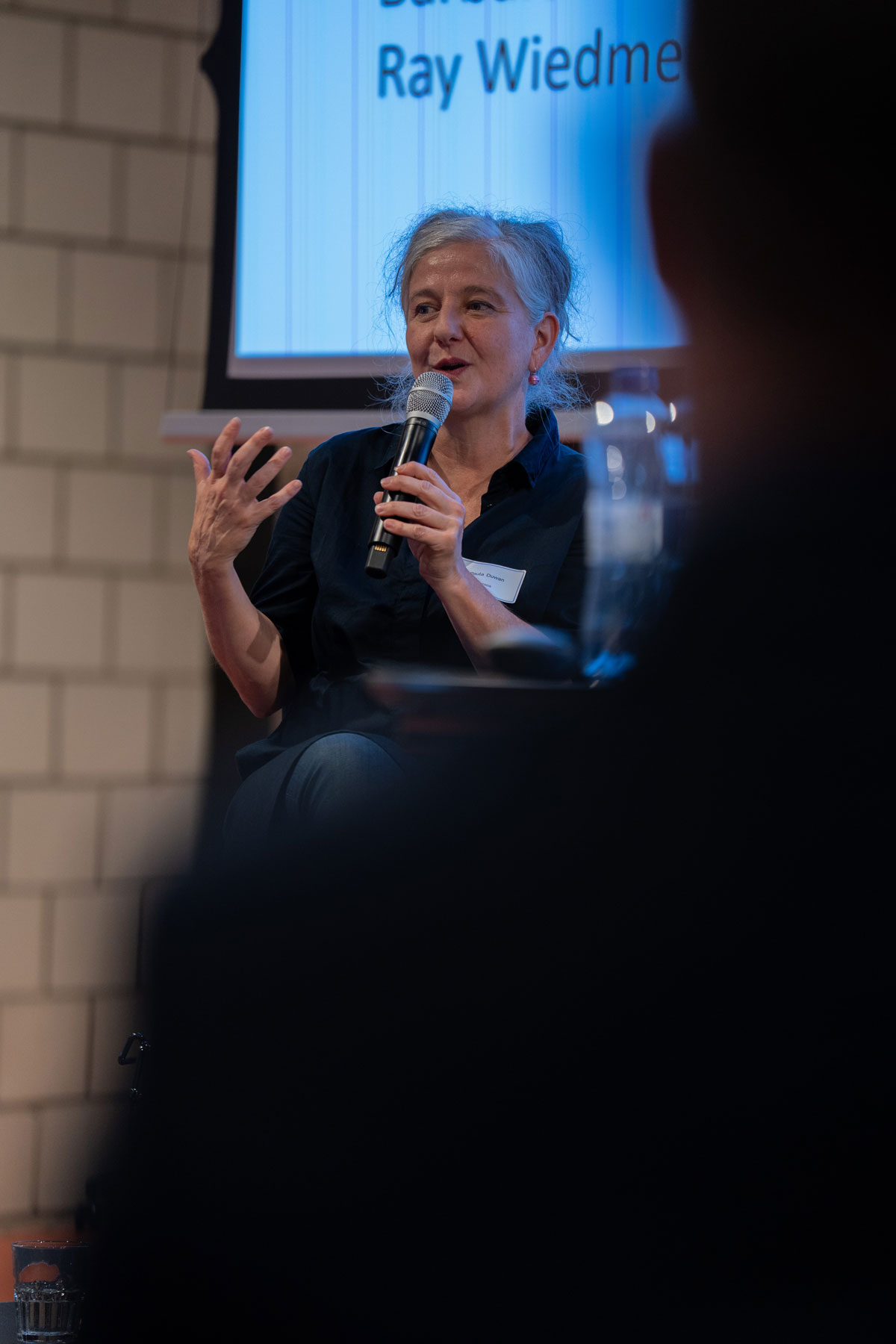
In her keynote, «Lernen mit Style.», Charlotte Axelsson, Head of the Centre for Digital Learning at Zurich University of Teacher Education, took participants on a journey of thought into the future of learning spaces. She showed that the design of digital learning environments goes far beyond aesthetics and has a direct impact on learning.
Three attitudes shape her view of the future of education: scepticism, which critically questions technological promises; courage, which empowers us to explore new paths; and tenderness, which connects and preserves, ensuring that «Homo digitalis» – the human being in an increasingly digital world – remains human. In doing so, Charlotte Axelsson placed not technology, but people and their learning processes at the centre.
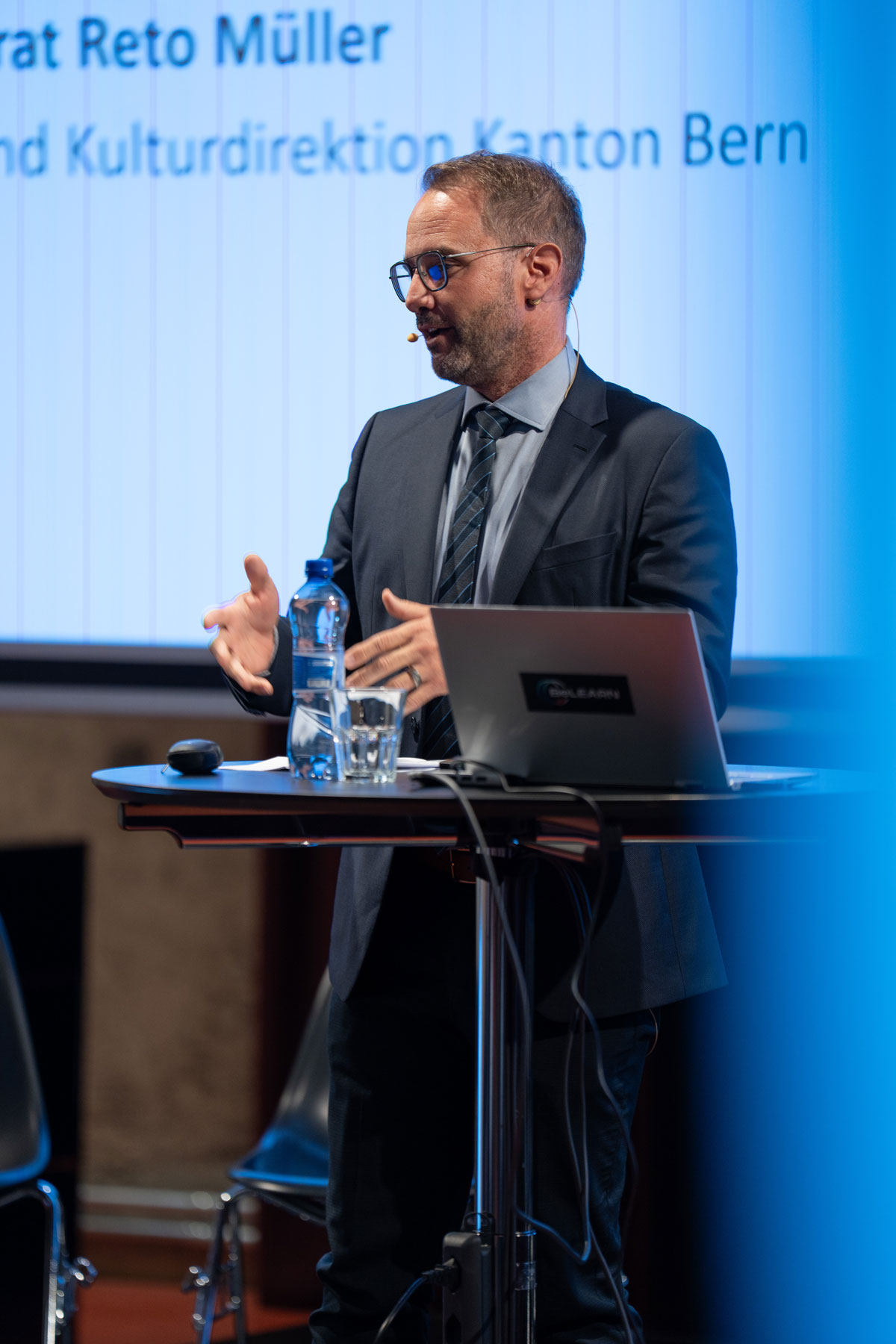
At the end of the main programme, Bernese Government Councillor Reto Müller welcomed the participants. He highlighted the importance of engaging actively and responsibly with digital transformation in education. At the same time, he acknowledged BeLEARN’s role as an institution that brings together different stakeholders and fosters exchange between research, practice, public administration and business.
From vibe coding and virtual reality to AI and inclusion
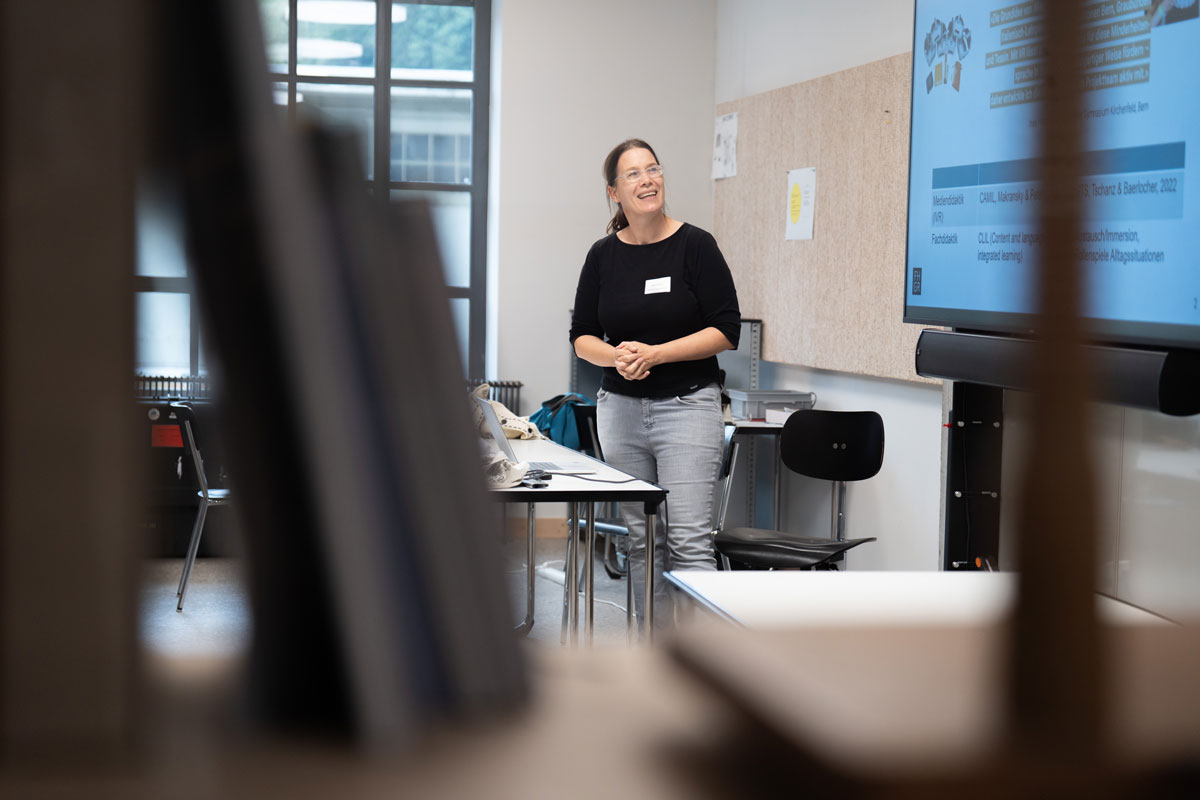
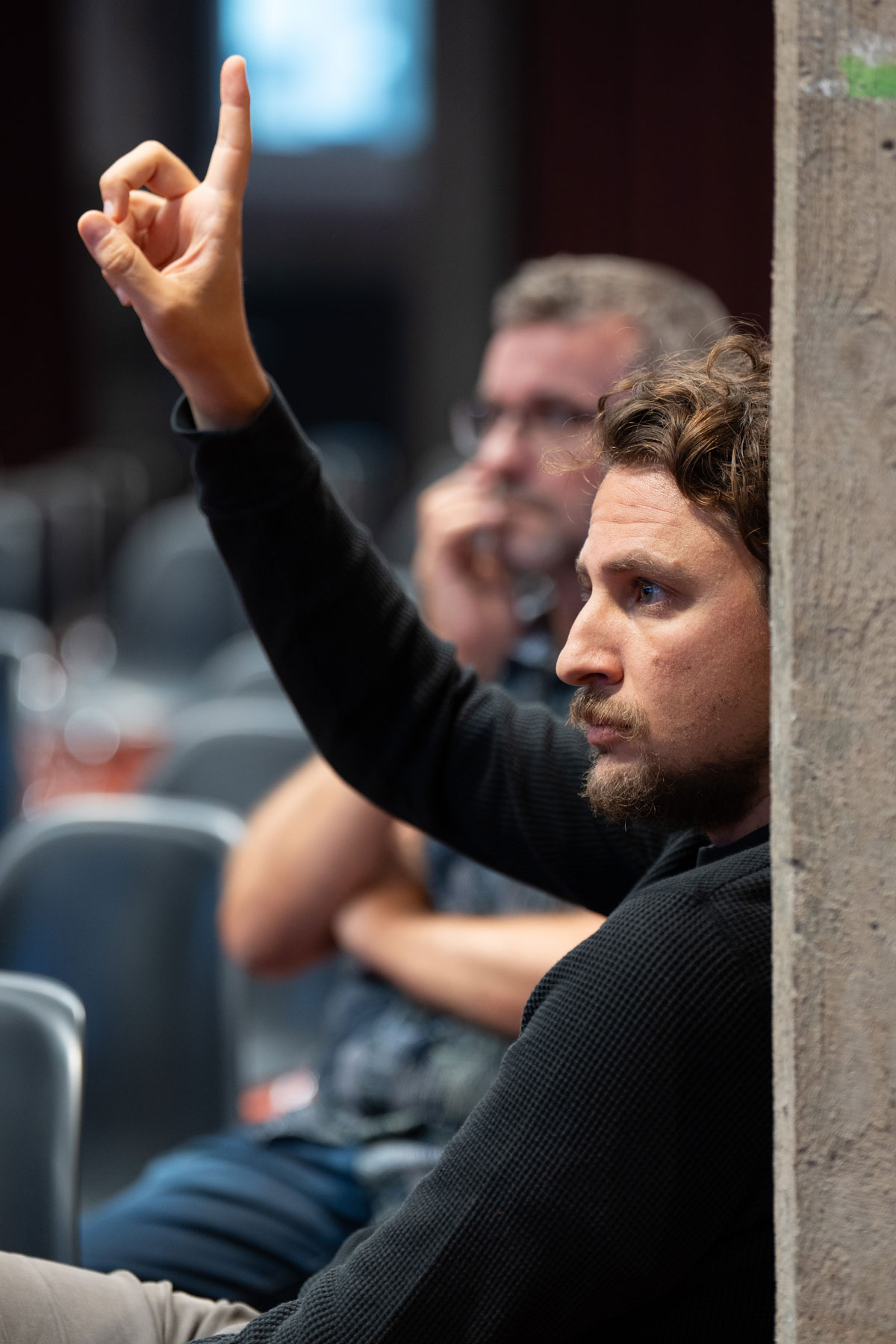
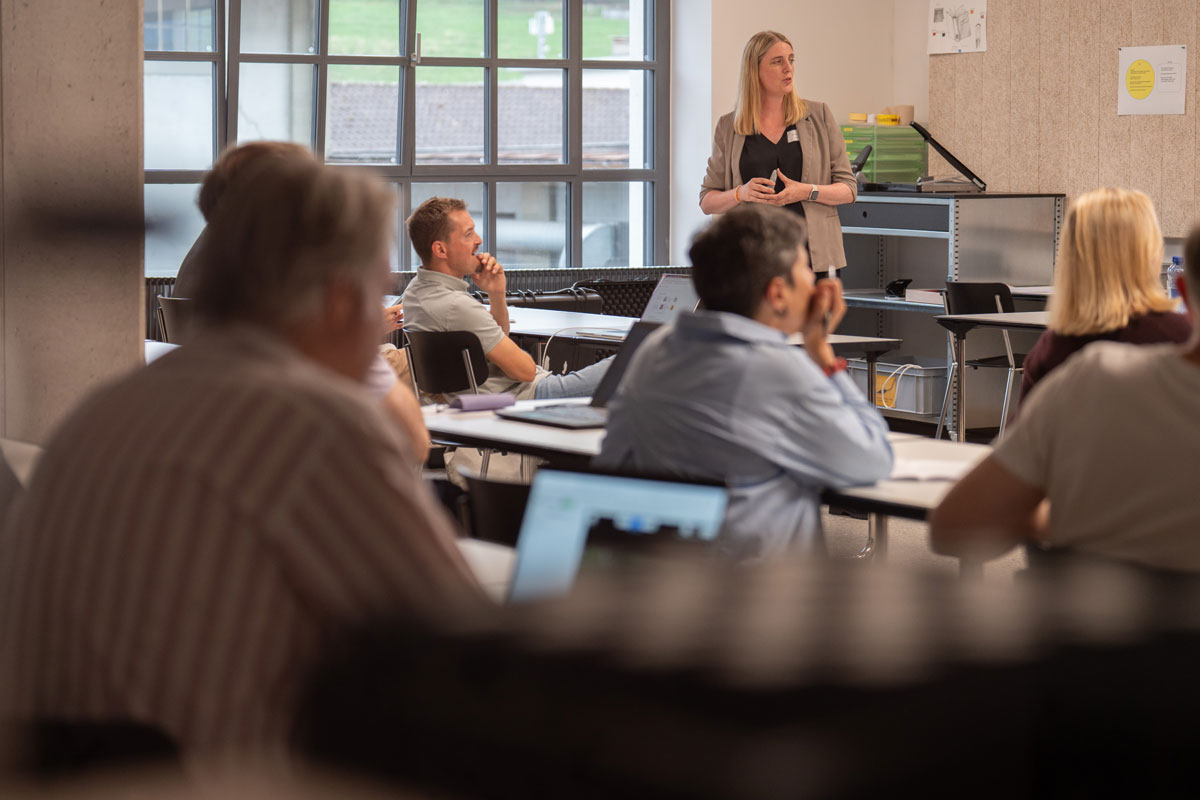
A total of 16 interactive sessions provided space to discuss current challenges, reflect on research findings and directly explore practical tools. Topics ranged from artificial intelligence, virtual and extended reality and EdTech to self-organised learning, smartphone-free schools, inclusion, co-creation and the transfer of educational innovations.
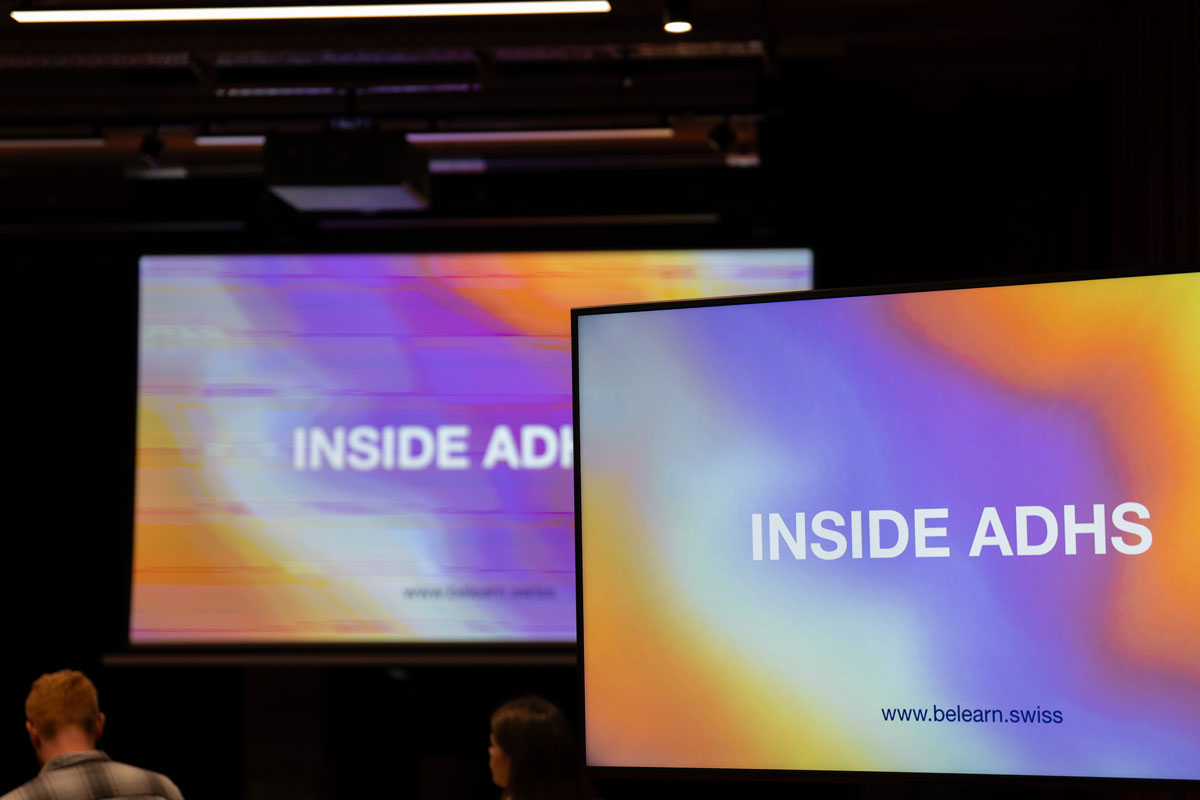
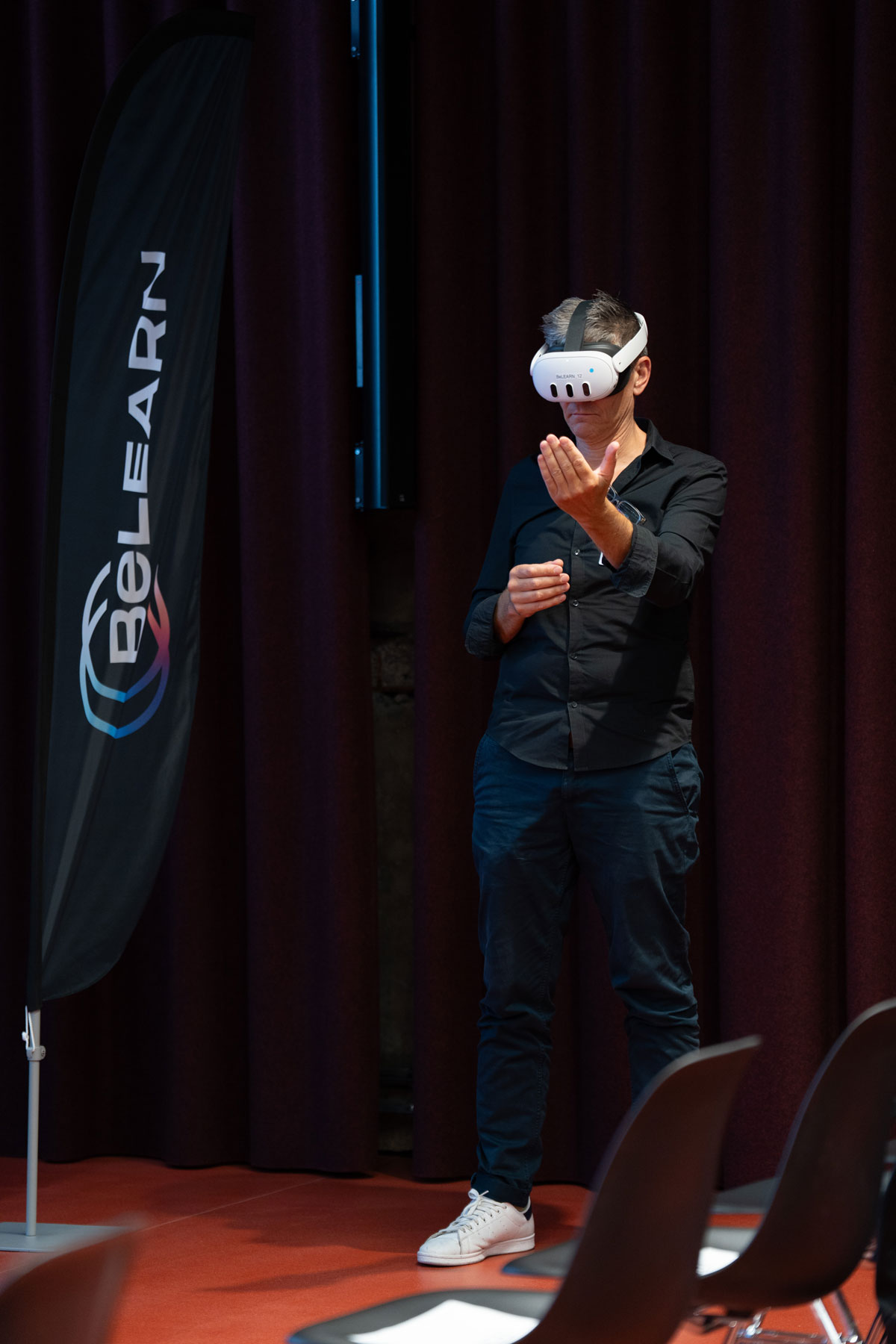
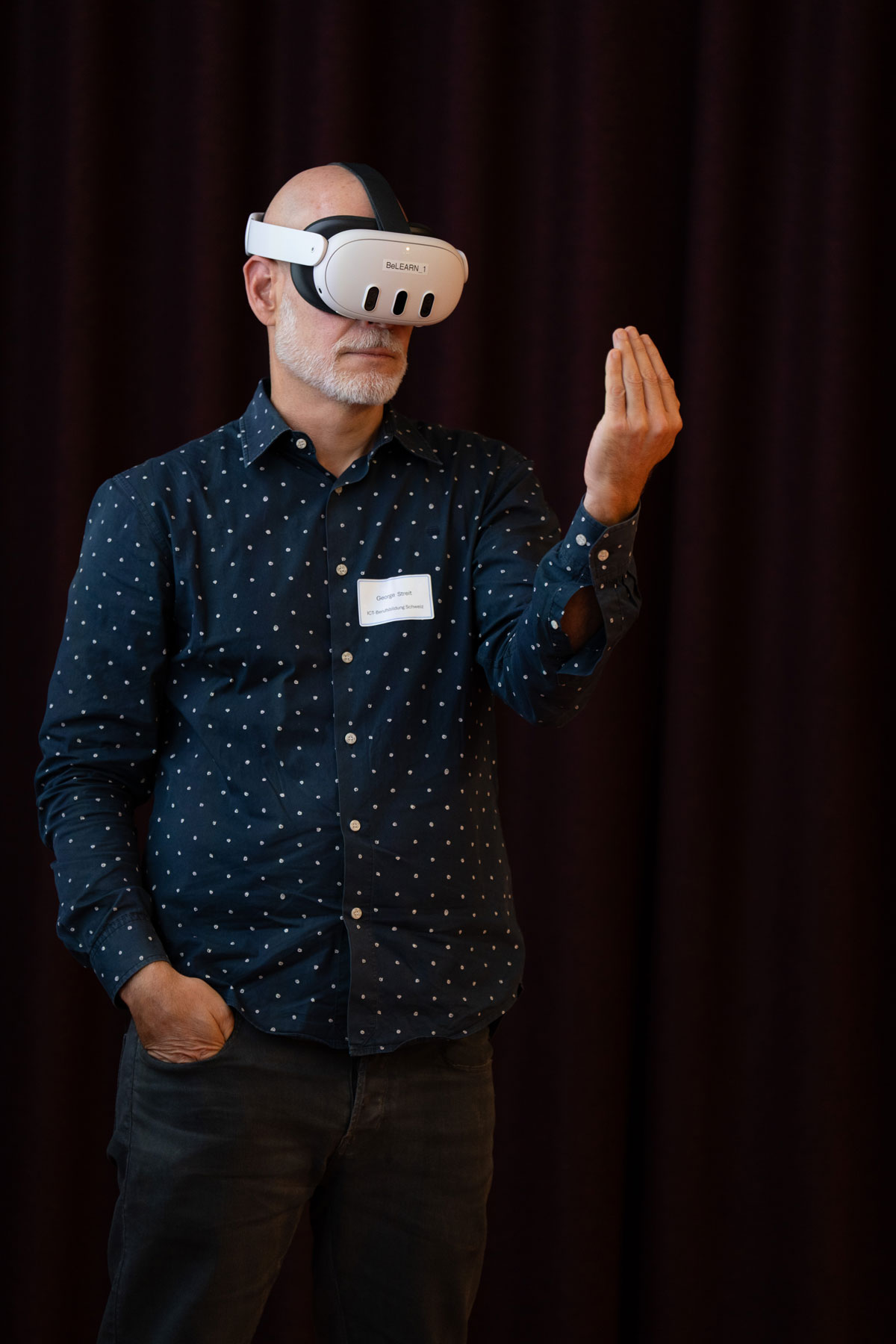
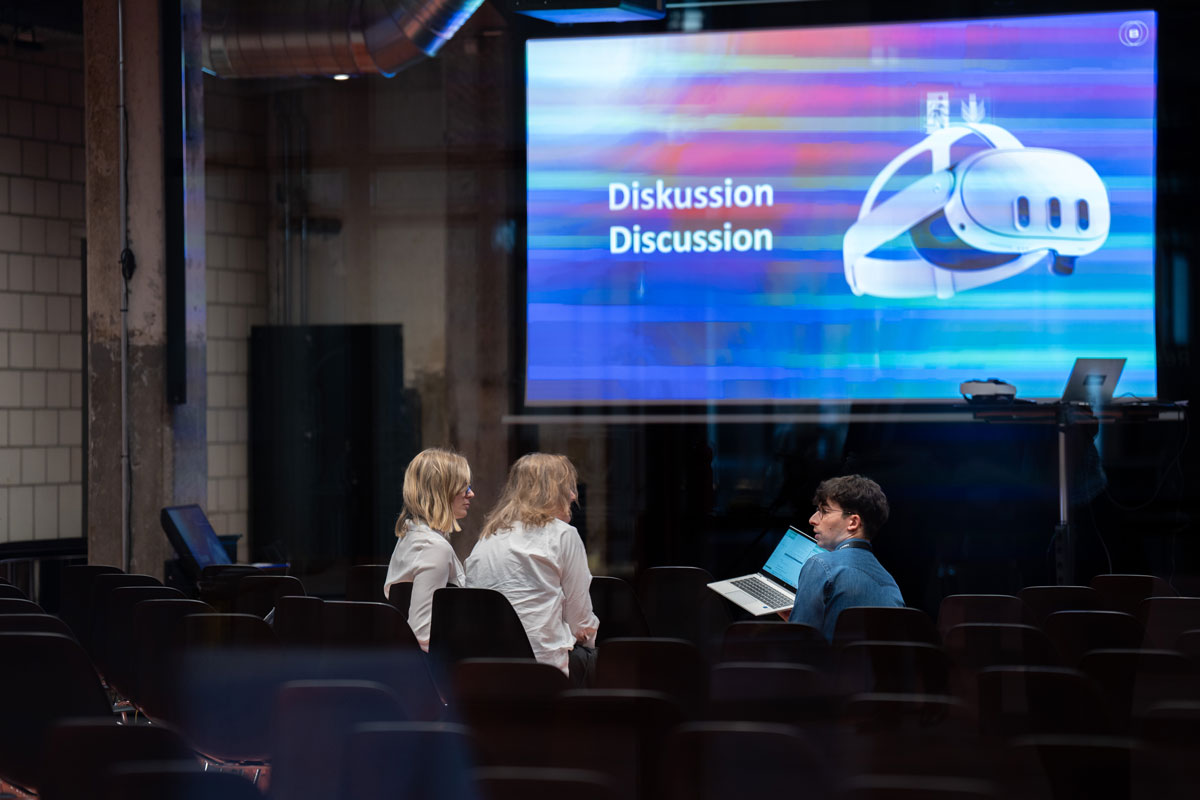
The session on «Vibe Coding in Vocational Education and Training», for example, demonstrated how new technologies can be used in an accessible way to address concrete challenges. In the «Inside ADHD» session, participants used a VR simulation to experience first-hand what typical attention and perception challenges faced by people with ADHD can feel like in a learning situation. The VR application «Viagg-io» also demonstrated the potential of immersive learning environments: learners of Italian travelled virtually to Italian-speaking Switzerland and practised their language skills in realistic conversational situations.
Other sessions explored how schools can find an appropriate approach to smartphone use. Drawing on the «PhocusPrim» research project, participants discussed different school policies as well as the experiences of teachers, parents and school leaders. In the session on «XaraEdu», participants learned how learners can practise conversations with an AI-powered avatar and reflect on their communication skills in a safe virtual environment. Another session invited participants to discuss BeLEARN’s translation model for vocational education and training. Co-creation was also explored from various perspectives. An international perspective was provided by the session on digitalisation and inclusion, which presented experiences from an exchange between Swiss and Chinese schools and discussed them in relation to the use of AI in Swiss schools.
A diverse programme across institutional and language boundaries
The conference was made possible by contributions from experts from a wide range of universities and educational institutions. Participants included representatives from the University of Bern, Bern University of Applied Sciences, PHBern, Zurich University of Teacher Education, Lucerne University of Teacher Education, the PH Institute NMS Bern, EPFL and its LEARN Centre, as well as the University of Applied Sciences of the Grisons. These perspectives were complemented by contributions from schools, vocational education and training institutions such as EB Zurich and ICT Vocational Training, EdTech start-ups and other practice partners.
It was precisely this diversity of institutional and professional perspectives that defined the character of «Translation 2026»: educational innovation emerges when different experiences come together, are reflected upon collectively and translated into concrete solutions.
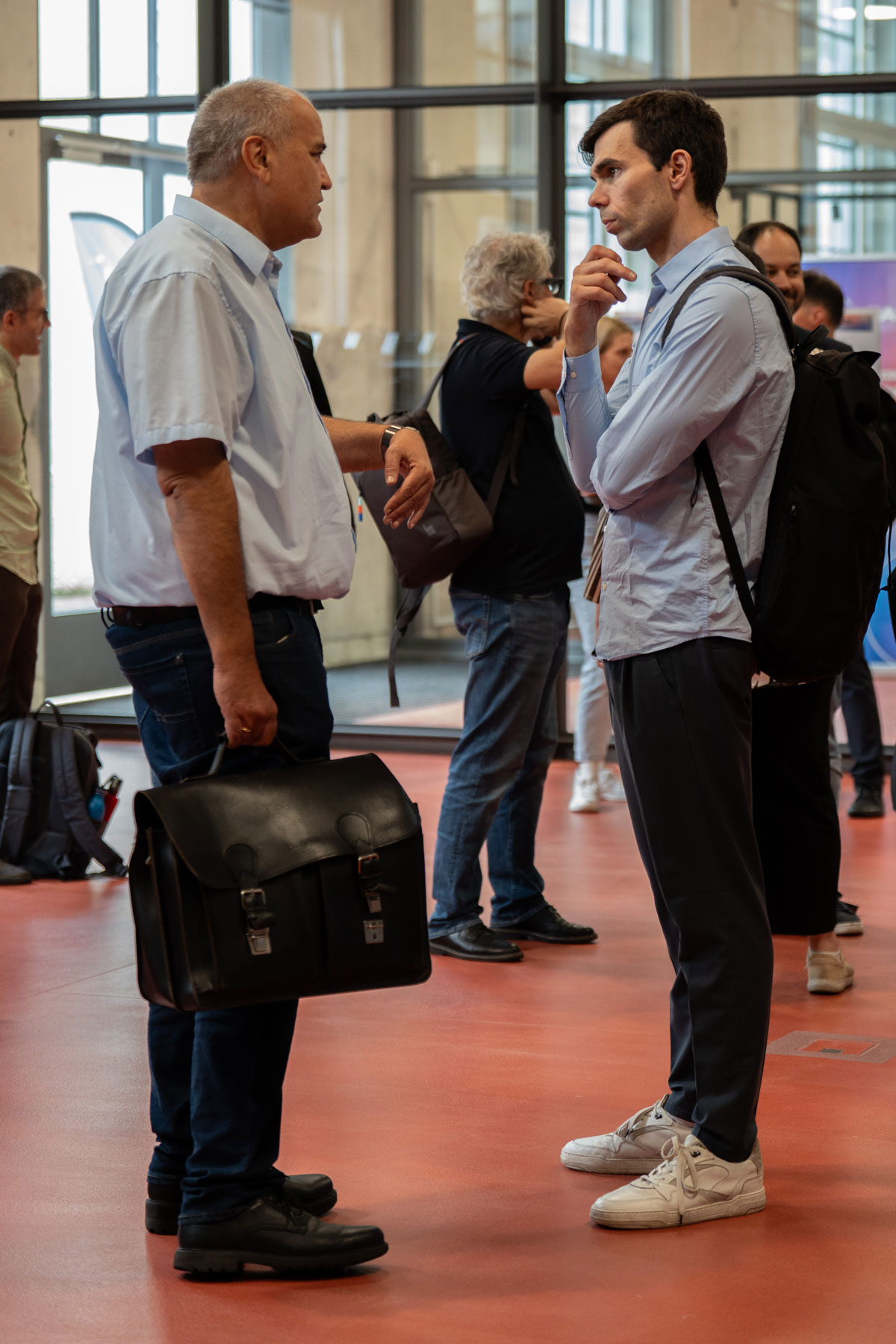
The apéro that followed provided an opportunity to continue the conversations from the sessions and make new connections. «Translation 2026» enabled exchange across institutional and professional boundaries and a shared exploration of current questions surrounding digital transformation in education. True to the conference motto, education was designed – together.
Impressions