Virtual Reality Public Speaking Training
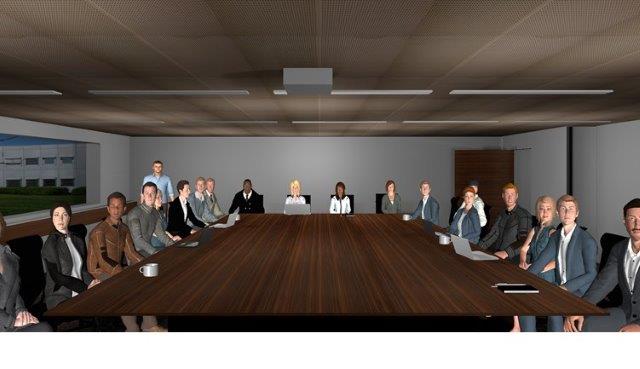
Virtual Reality Public Speaking Training (VRPST) vs. traditional preparation: In the experiment, VRPST significantly improved presentation quality. It proved to be effective and well accepted.
Duration: September 2022 – December 2022
Status: Completed
Educational level: Special Needs Education, Primary Level, Lower Secondary Level, Upper Secondary Level – Vocational Education, Upper Secondary Level – Grammar School Education, Tertiary Level
Topic: Digital Tools
Keywords: VR – Virtual Reality
Initial Situation
Public speaking is a core requirement in many professional and personal situations. At the same time, fear of speaking in front of others is widespread, and strong presentation skills require targeted practice. Previous studies have suggested that Virtual Reality Public Speaking Training (VRPST) is a promising method for reducing presentation anxiety and improving speaking abilities. However, until now, there has been a lack of studies with both objective and subjective indicators and valid control conditions. This project aimed to close these gaps and assess the effectiveness of VRPST compared to traditional preparation.
Objectives
The main goal of the project was to investigate the effectiveness of Virtual Reality Public Speaking Training (VRPST) compared to traditional, self-directed preparation. Both objective and subjective indicators of presentation performance should be considered. The focus was on the question of whether practicing with the help of virtual reality allows for better preparation for a real presentation situation than conventional methods. The goal was also to capture the acceptance of VR technology among users and thus be able to make statements about the practical potential of VRPST in the educational context.
Method
In an experiment, 42 participants were tasked with presenting a card game (“Joomo”) to a four-person audience. They were randomly assigned to either the VRPST or control condition (conventional preparation at home). Both groups had a total of 60 minutes of preparation time. The VRPST group trained for 30 minutes in a virtual environment without feedback and repeated the presentation three times. Then everyone gave a presentation to a real audience. The quality of the explanation of the rules, the audience’s assessment, and the self-assessment of the presentation were evaluated.
Results
The results clearly showed that VRPST positively influences presentation quality. Participants in the VRPST group explained the rules of the game more clearly and in a more structured manner than those in the control group. The audience also rated their presentations as higher quality. Furthermore, participants in the VRPST condition showed a more positive self-assessment of their own performance. The repeated practice in the virtual environment thus had an effect on both the actual performance and the confidence. Within the VRPST group, a high level of technology acceptance was also noted; many would use such training in the future if it were available to them. Overall, the results showed that VR-based training was superior to traditional preparation.
Implemented Translation
Due to the positive results and high acceptance of the training, VRPST was directly transferred into educational practice. A concrete example of this is the “Immersive Teaching Simulator” (developed by Bachmann and Dobricki at BFH/PHBern), which uses virtual reality elements in teacher training. A similar VR tool is used in music classes to provide prospective teachers with a safe and realistic practice situation. The project exemplifies how research results can lead to concrete didactic innovations and thus contributes to the further development of practical training formats in the education sector. The project has shown that virtual reality can be an effective tool for improving communication skills. The results provide valuable insights for the use of VR technologies in education and training – particularly in areas where presentation skills play a central role. At the same time, the project promotes the integration of new digital technologies in teacher education and lays the groundwork for further applications in other subjects and contexts. It strengthens confidence in VR-based training methods and supports the evidence-based further development of modern didactic concepts. At the same time, the project promotes the integration of new digital technologies in higher education and establishes the foundation for further applications in other subjects and contexts. It strengthens confidence in VR-based training methods and supports the evidence-based advancement of modern didactic concepts.
Bachmann, M., Subramaniam, A., Born, J., & Weibel, D. (2023). Virtual reality public speaking training: Effectiveness and user technology acceptance. Frontiers in Virtual Reality, 4. https://doi.org/10.3389/frvir.2023.1242544