Virtual Reality in Nursing and Medical Informatics Education
The project used an immersive and interactive 360º video to investigate how VR can be used in nursing and medical informatics education.
Duration: January 2025 – December 2025
Status: Completed
Educational Level: Tertiary Level
Topic: Digital Tools
Keywords: Digitalised Teaching Modules, VR
Initial Situation
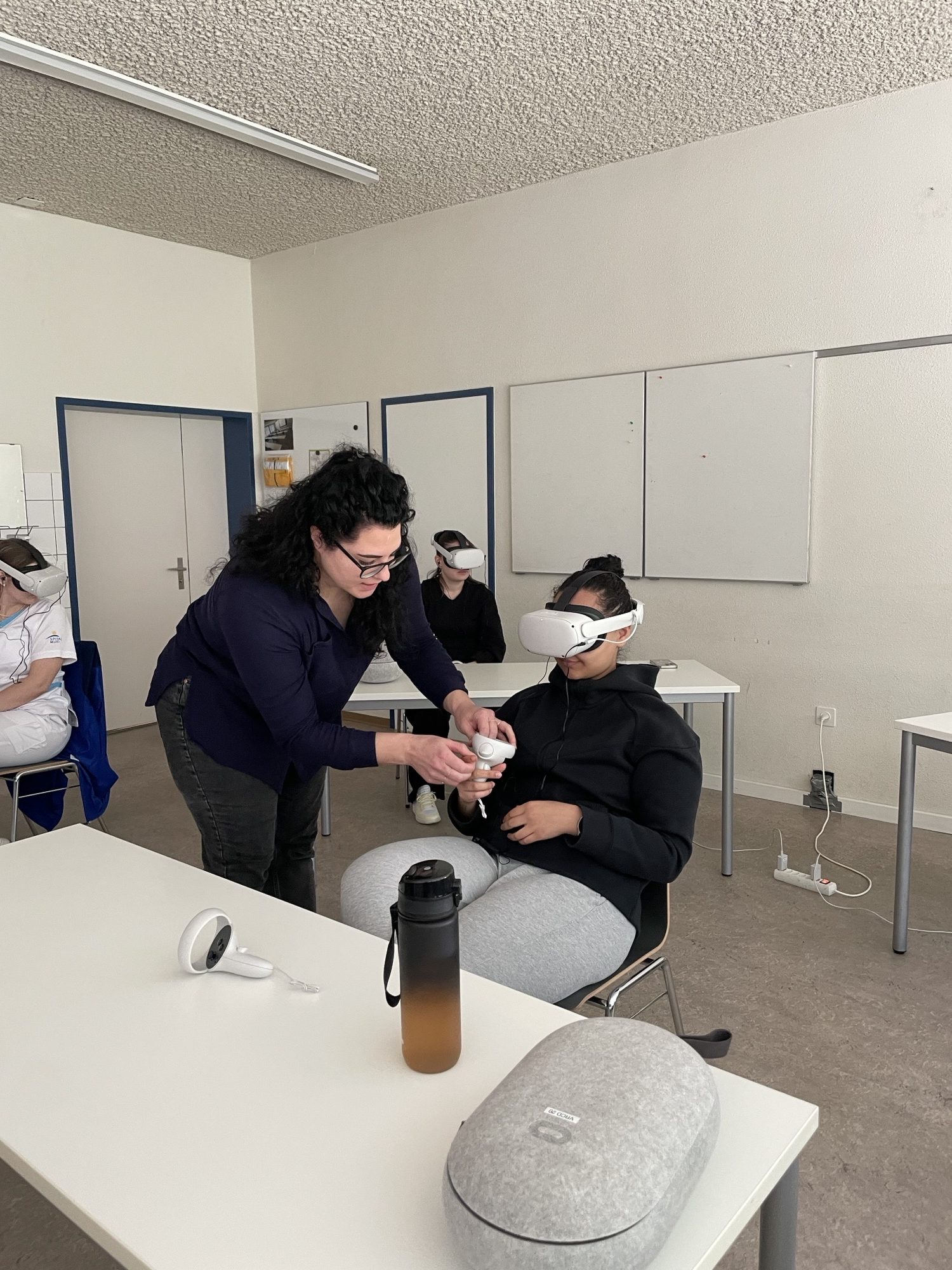
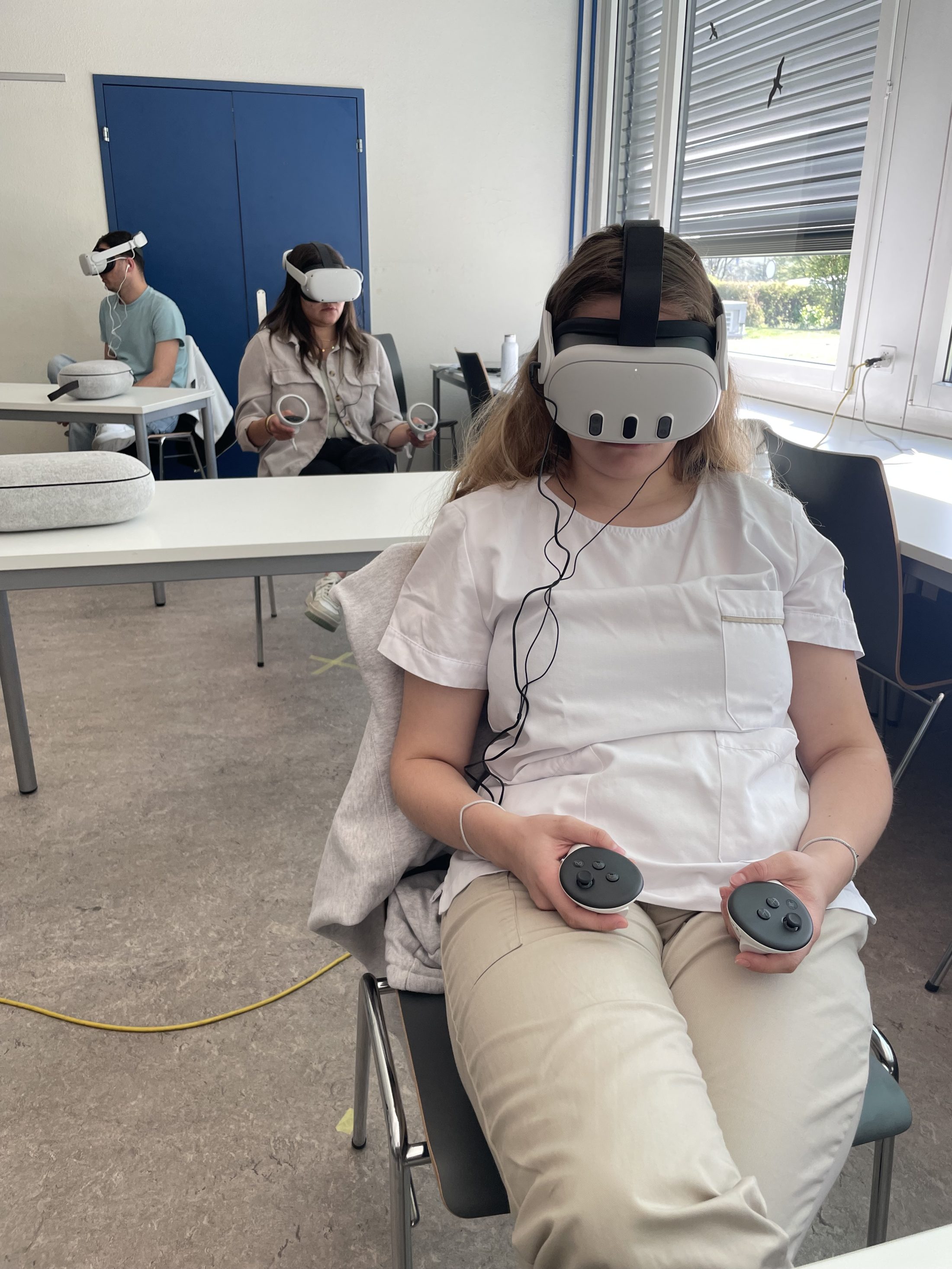
Immersive and interactive VR tools are still rarely used in education, despite enabling students to immerse themselves in realistic everyday work situations and learn from these situations, regardless of time and place. The project used an immersive and interactive 360º video, which was developed as part of the SNF NFP 77 project Digi-care, to investigate how VR can be used in teaching and how students learn with it. The 360º video is based on a real observed situation that was re-enacted by actors. It shows different facets of patient care information transmission with digital devices during a shift handover in a Swiss hospital. The first part of the shift handover takes place in the hospital corridor, the second scene in the patient’s room. During the video, there are active points to click on, which contain illustrations and learning tasks related to the defined learning objectives.
Previous Project
This project builds on the previous project Digitalisation in Healthcare, in which key moments of digital information transfer in hospitals were identified and a VR prototype for teaching digital competencies was developed.
Objectives
The first objective of the project was to develop two different teaching units a) for nurses and b) for medical informatics bachelor students based on the same VR-tool collaborating with experts from the practice in nursing and medical informatics education. The second aim of the project was to evaluate the effectiveness of the VR-based teaching unit. In nursing, the teaching units focused on the topic of patient data protection and patient security during digital information transmission. In medical informatics, the teaching unit focused on the topic of IT system usability and the design of different interfaces for the digital patient curve and order entry.
Method
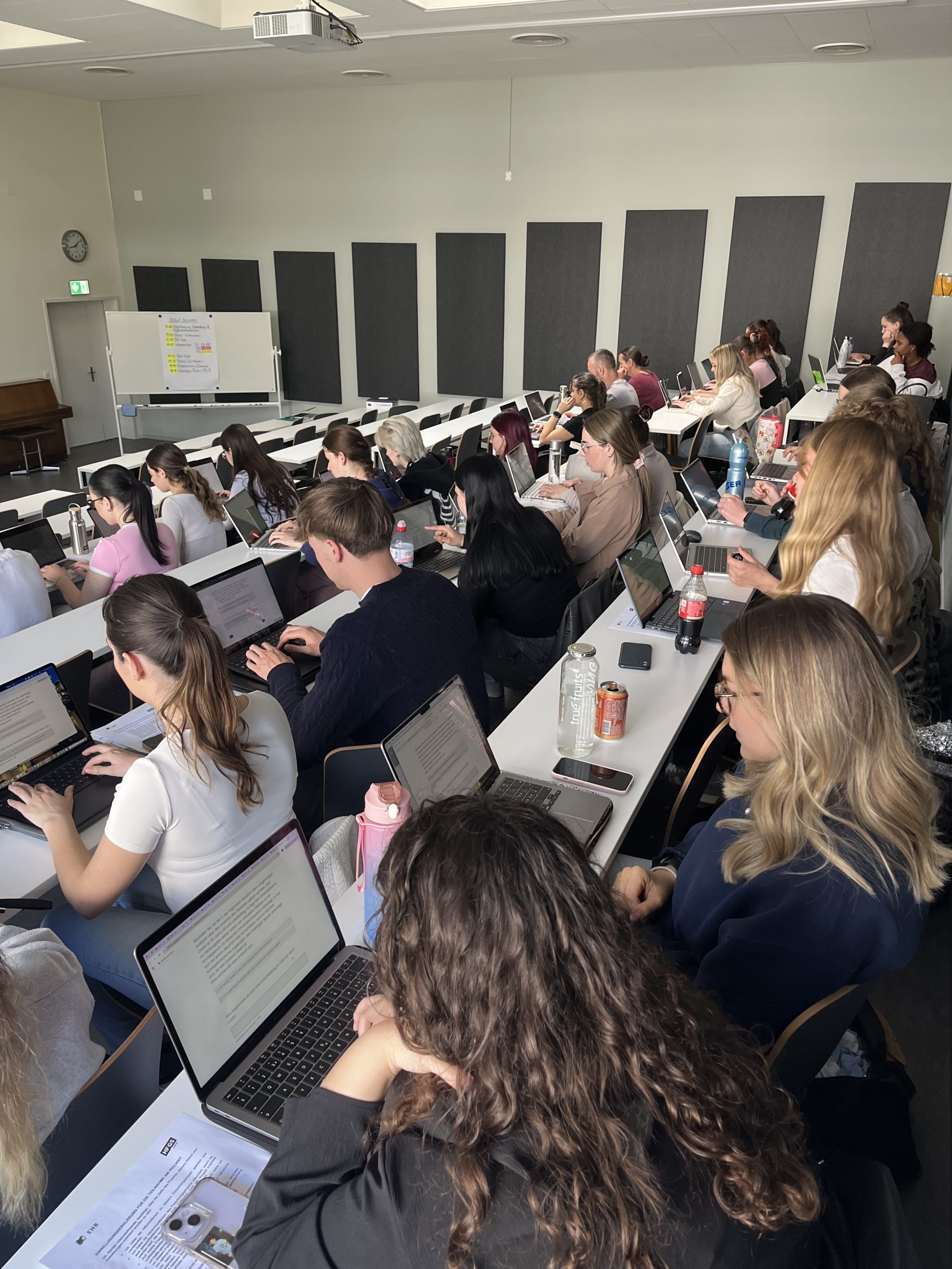
The active points within the video were modified or replaced to support the respective learning goals. To evaluate the effectiveness of the VR-based teaching units, we used a pre-and post-test control group design. Nursing and medical informatics students were tested according to the educational goals defined for the respective field. Furthermore, the students were also asked about their attitude towards 360° videos and their experience of using the 360° video. In the field of nursing, in order to find out whether the teaching units had a more long-term effect, the students were questioned again around six weeks after watching the video.
Results
In nursing, the results of the research show that immediately after watching the video and also six weeks later, the students of both groups had gained increased knowledge on the subject of patient data protection and patient security and were more attuned to the issue. The students who wore a VR headset reported increased motivation levels when learning and deeper immersion in the situation than the students who watched the video on a computer screen. The increased sense of presence in the group wearing a VR headset had an indirect positive effect on knowledge acquisition via learning motivation. The medical informatics student group was small. No statistically significant increase in knowledge could be measured although 4 out of 5 knowledge questions had positive mean increase in the intervention group. In this group there was a significant gain in ease of use and confidence to use 360º videos. Furthermore, those students who used the video with VR headset reported a stronger feeling of immersion and found the active points useful for learning.
Implemented Translation
Overall, the project itself can be considered a translation into educational practice as we developed and implemented a teaching unit in practice with a 360-degree video and inspired teachers how to use these kinds of videos in their own lessons. In addition, the project was presented to VET professionals, policymakers, and stakeholders. In nursing, schools in other cantons have expressed interest in using the VR tool.
Schmitz, M.-L., Candido, V., Blanc, G., Salzmann, P., & Cattaneo, A. (2025). Eine 180-Grad-Wende beim Lernen? Skilled, 2, 17.