The Beauty and the Machine, Joining Aesthetics and Robotics in Education – 1
We are investigating the interplay between aesthetics and robotics to enhance pre- and in-service teachers' motivation and skills in digital education.
Duration: January 2024 – December 2024
Status: Completed
Educational Level: Primary Level, Tertiary Level
Topic: Digital Skills & Literacy, Digital Tools
Keywords: Digital Skills, Educational Robotics
Initial Situation
Digital skills are essential in education and will become even more important in the future. Educational robots can support the development of these skills in a STEM context, bringing high motivation, transversal skills and interdisciplinary topics to pupils. Despite these key elements, educational robots are still not common in classes because (future) teachers often do not feel connected to this technology or confident enough to integrate it into their teaching. There has been a lot of research that wants to change this. However, there is a lack of research regarding the potentials of combining aesthetics and robotics. Studies have shown that aesthetics can lead to positive emotions which have a huge potential to increase the integration of educational robots in schools, especially among (future) female teachers. Our research project addresses this specific research gap with the following research question: To what extent does the combination of robotics and aesthetics influence pre-service teachers’ motivation to integrate educational robots into their digital education lessons, specifically via positive emotions? In an experimental study, we investigated pre-service teachers’ shift in motivation and skills regarding the use of educational robots after applying an aesthetic approach.
Follow-up Project
The follow-up project, The Beauty and the Machine – 2, builds on the findings of the first phase to examine how the transition from STEM to STEAM can be shaped and how aesthetically designed robotics offerings impact aspects such as self-efficacy, expectations and interests.
Objectives
Our objective is to have validated educational materials that help to foster teachers’ digital motivation and skills. The material builds on scientific findings which hold information about the specific factors that increase motivation and skills. The materials adopt the benefits of combining aesthetics and robotics (e.g., more positive emotions) which foster pre-service teachers’ motivation to integrate educational robots into their future lessons. We further aim to disseminate our educational materials widely through targeted project communication, both internally and externally.
Method
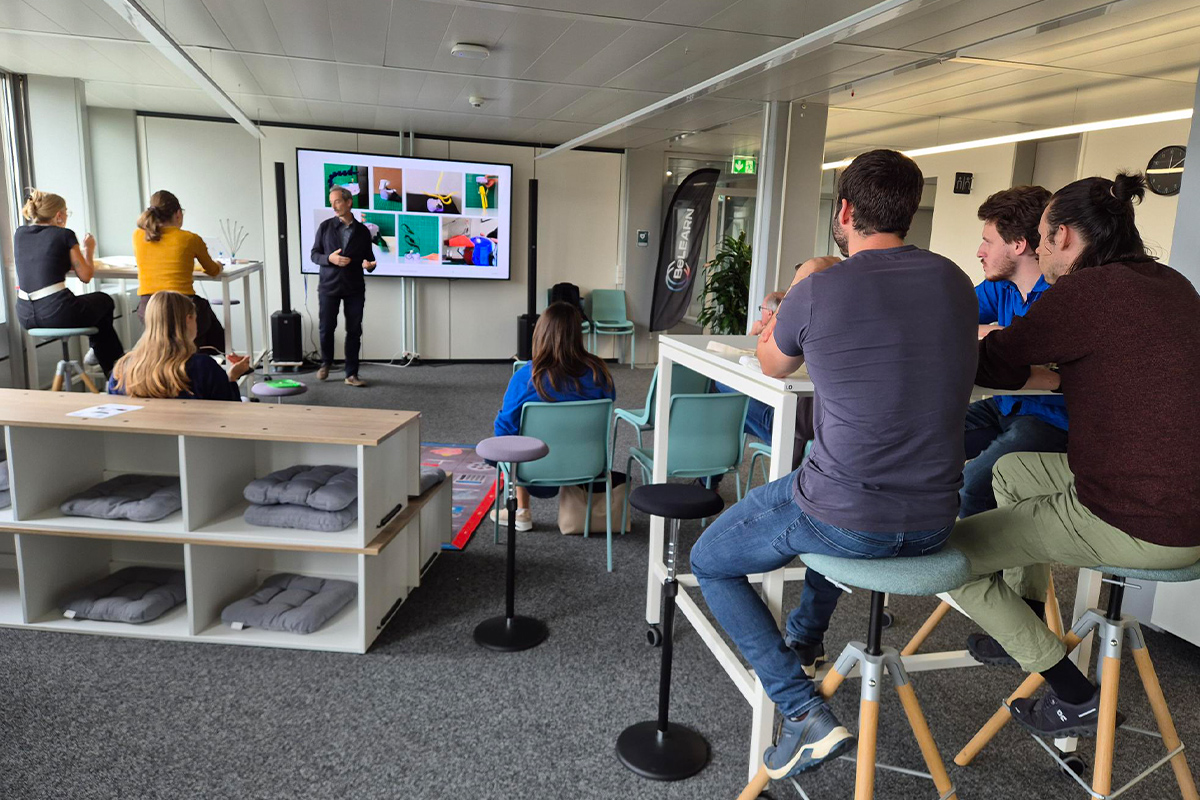
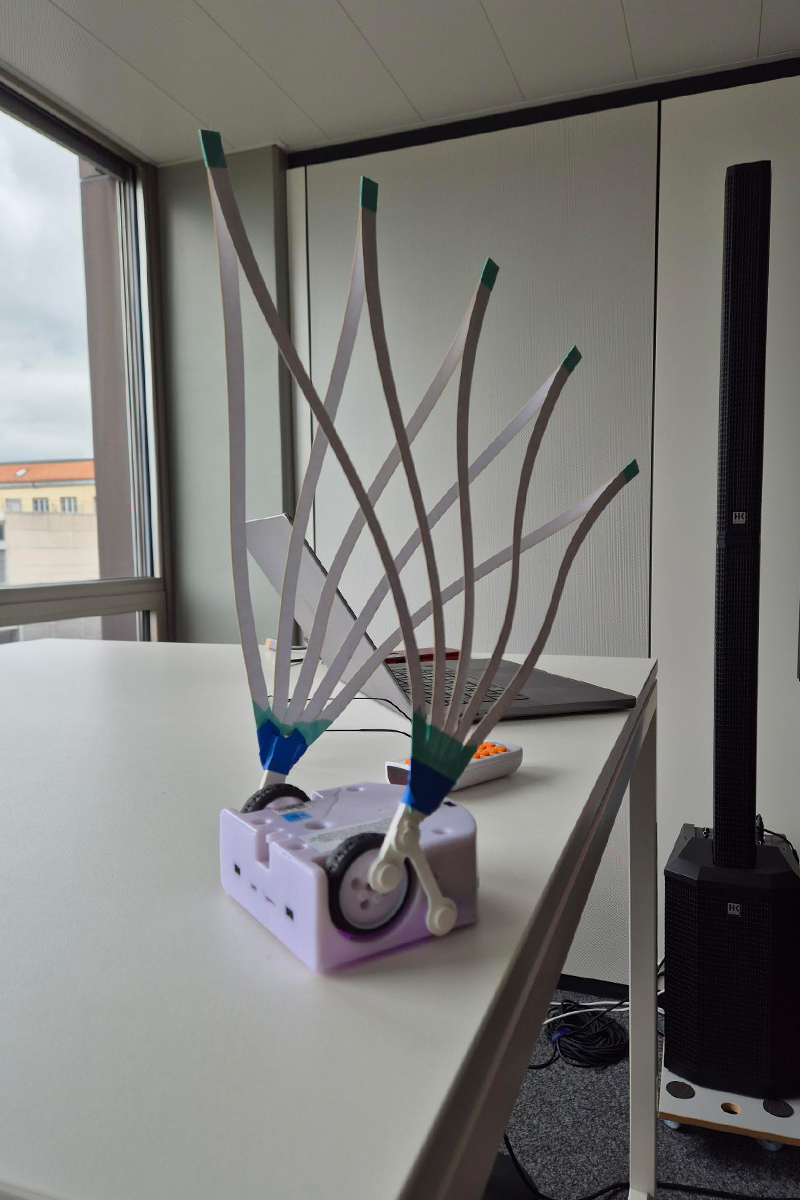
In the spring semester of 2024, we conducted an exploratory experimental study with pre-service teachers at PHBern and investigated their shift in motivation and skills regarding the use of educational robots after the application of an aesthetic approach. We compared pre-service teachers’ skills and motivation to interact with the educational robot Thymio after splitting pre-service teachers into two groups: one group was interacting with an educational robot with an aesthetic costume (treatment group) and one group interacted with robots without any aesthetic costume (control group). By breaking stereotypes with the help of the costume, we assumed to positively impact pre-service teachers’ motivation related to interacting with educational robots.
Results
Data revealed that participants shared a high agreement about the importance of aesthetics in robotics. On a scale from 1 (strongly disagree) to 5 (strongly agree), participants highly agreed that the appearance of a robot can affect pre-service teachers’ motivation and engagement (M = 3.99, SD = 0.93). Although participants agreed that the aesthetics of educational robots is important, our data did not reveal differences between those pre-service teachers who interacted with the costumed Thymio (treatment group) and those who interacted with the blank robot (control group). The treatment group’s skills in interacting with Thymio were not higher than the control group’s interaction skills. Also, there were no group differences in changes in motivational aspects over the course of the workshop.
Implemented Translation
Since the study was only exploratory, we did not implement the results of our project in to educational practice.
We used the findings from our exploratory study mainly to plan our upcoming research.