Signals and transitions
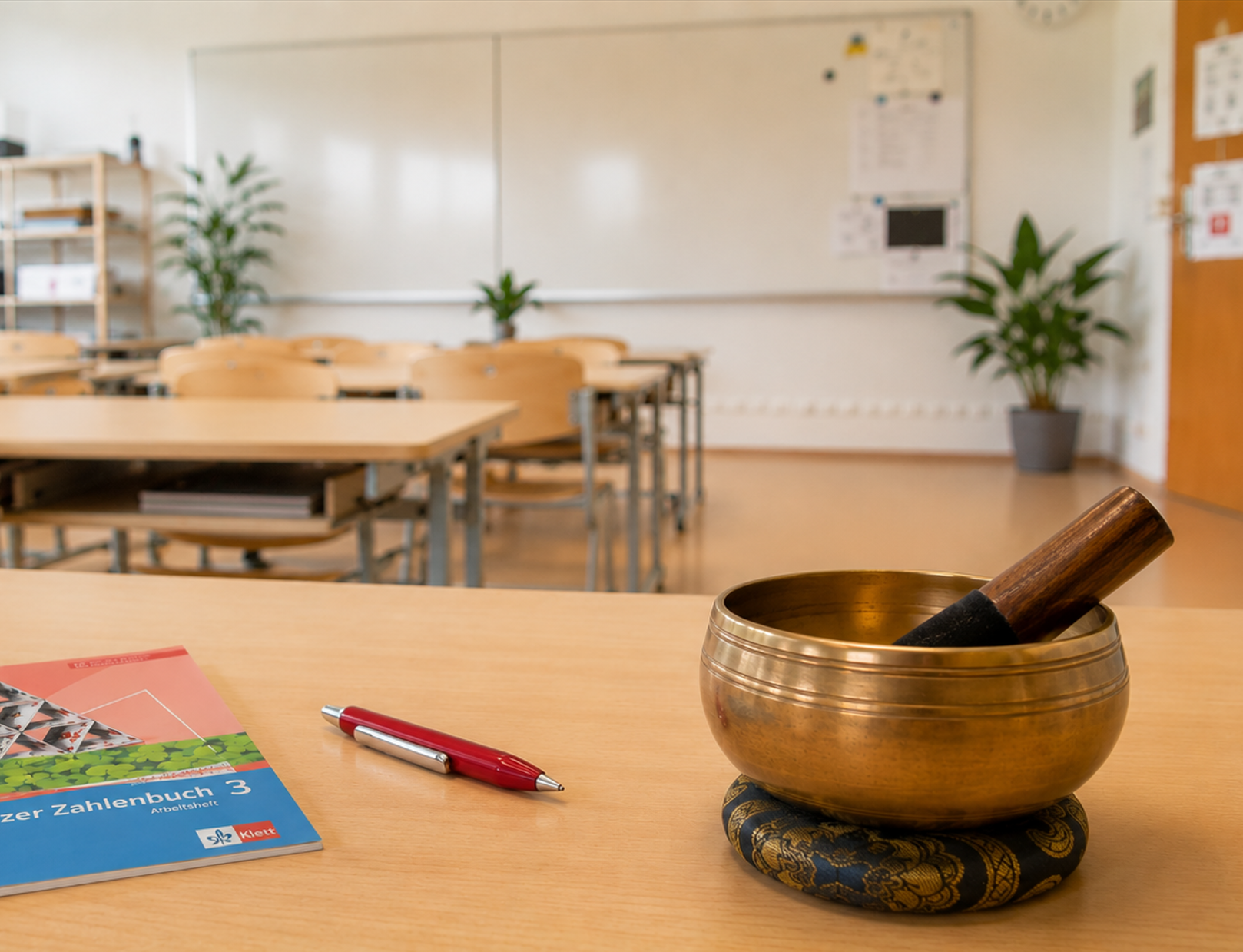
Signals and transitions structure the school day and create more effective learning time. Non-verbal signals such as singing bowls, countdowns or music provide orientation without the teacher needing to intervene verbally each time.
Key facts
Subject / subject area: all subjects
School level(s): Cycle 1 and 2
Implementation
Signals and transitions are an underestimated but highly effective element of classroom management. Students need a structured learning environment where routines are practiced and transitions flow smoothly. Nonverbal signals help focus attention more quickly, structure the school day, provide orientation, and create more effective learning time.
Unstructured transitions – moments between two activities without clear direction – often cause restlessness, distraction, and lost learning time. A consistent signal provides clarity and routine without the teacher having to intervene verbally each time.
It doesn’t have to be one single signal for everything. Different sounds can have different meanings, and over time, the class learns to interpret each tone instantly. This creates a “sound language” in the classroom that works without a single word.
Auditory signals can be used for many classroom moments
- Morning circle or ritual begins
- Start of class – everyone calms down and gets ready
- Monday morning routine
- Take out homework
- Distribute worksheets or materials
- Task explained – independent work begins
- Start of silent reading or quiet work
- Transition from individual to group work
- Transition from partner work to whole class
- Group presentation begins – everyone listens
- Start of a movement break
- End of a movement activity – return to seats
- Change of workspace (e.g., from desk to floor or reading corner)
- Close and put away digital devices
- Start or end of a work phase or test
- Clean up before recess
- Put on jackets before going outside
- Return from recess – calm down and refocus
- Transition to circle time
- Snack break
- Change of subject or activity
- Start of a relaxation or breathing exercise
- Quiet rules now apply
Proven signals for specific classroom situations
A sound signal like a singing bowl or wind chime works well for calm transitions, such as ending a quiet work phase, because the sound is gentle and not alarming. It’s also suitable for tests, as it doesn’t create extra tension.
A visible countdown or time timer allows children to finish their work independently, promoting self-regulation and a sense of control – ideal for group work, cleaning up, or changing rooms. However, during tests, visible timers should be avoided, as they can increase stress.
For cleaning up, a short, always identical piece of music works well: when the music stops, we’re done. For routines or room changes, a short chant or gesture can clearly mark the transition.
The key
The key is that children not only know the signals but internalize them. This works best when they are introduced, explained, and practiced during the first week of school – ideally through playful exercises. For example, the teacher gives the signal, and the children immediately show the correct reaction. Over time, signals become routines that provide safety and structure.
Materials
Singing bowl, gong, wind chime, triangle, desk bell, rain stick, sound rod and many more.
References:
After: Selin Güler, primary school teacher and Translationsmanagerin at BeLEARN
Source: PHBern (2025). 10 suggestions for effective classroom management. PHBern