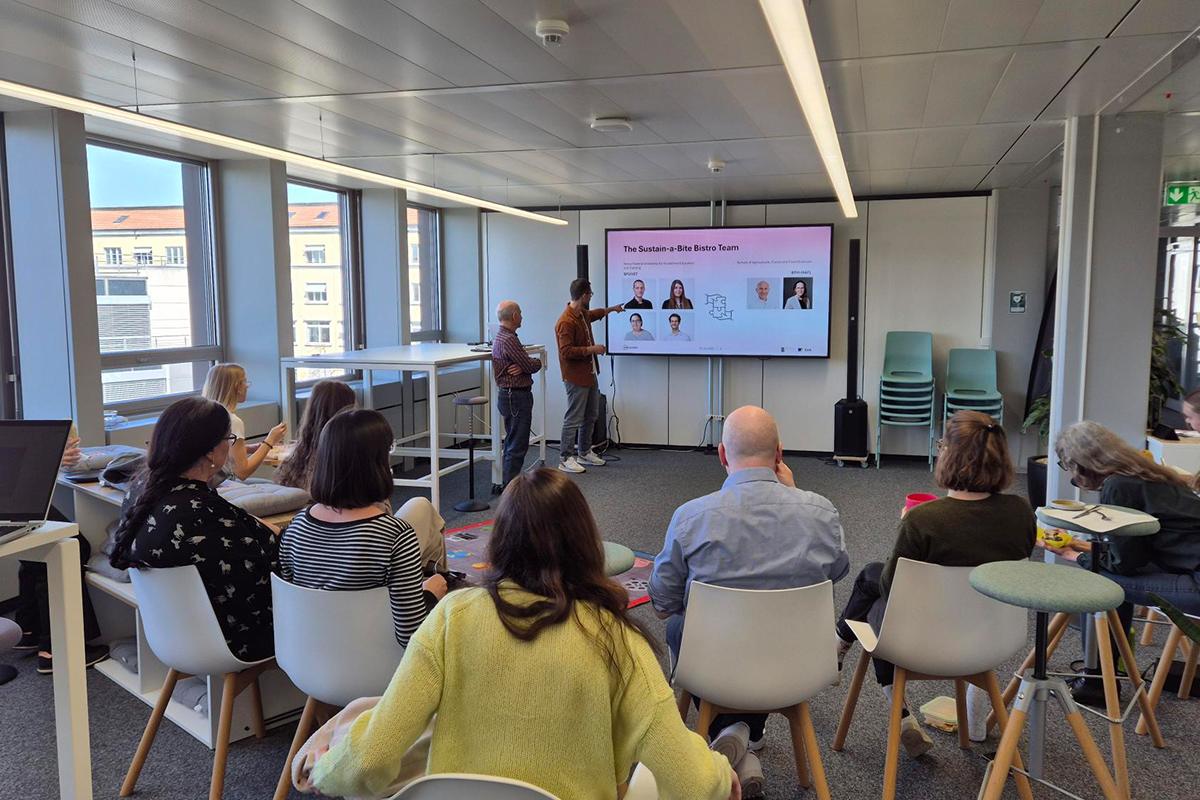
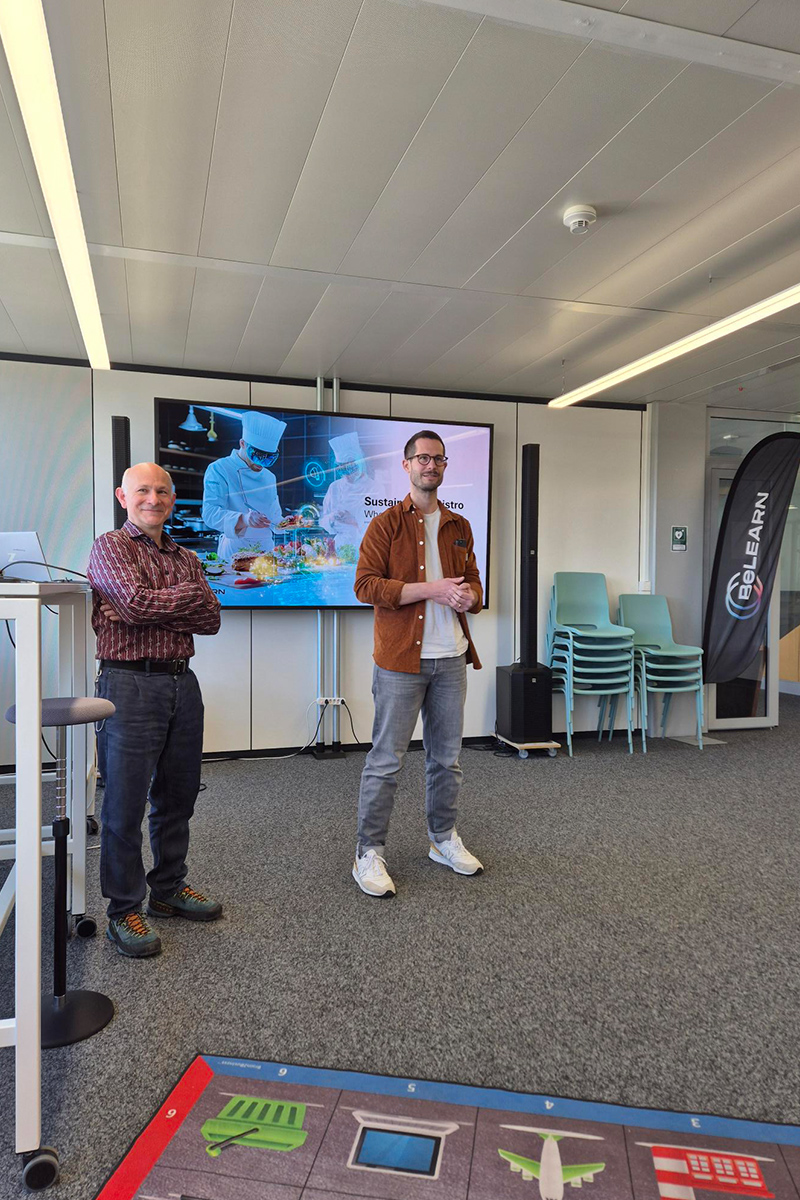
Sustain-a-Bite Bistro, Where Every Bite Matters – Immersive Gamified Learning for Sustainable and Healthy Food Choice
Sustain-a-Bite Bistro: A gamified VR experience to foster the development of transversal skills and mastering sustainable food choices.
Duration: January 2025 – December 2026
Status: Ongoing
Educational Level: Upper Secondary Level – Vocational Education, Tertiary Level
Topic: Digital Tools
Keywords: VR, Gamified Learning, Sustainability, ESD
Initial Situation
Sustainable and healthy nutrition is central to achieving the UN Sustainable Development Goals and to addressing pressing ecological, economical, social, and health challenges. The global food system is responsible for significant greenhouse gas emissions, biodiversity loss, and water consumption, while unhealthy diets contribute to rising rates of obesity and non-communicable diseases. In Switzerland, food is one of the main drivers of environmental impact, and diet-related diseases account for the majority of healthcare costs. Consequently, enhancing food competence and fostering transversal skills such as critical thinking and problem-solving are key levers for systemic transformation. Despite political mandates to integrate Education for Sustainable Development (ESD) across curricula, there is a shortage of engaging and high-quality teaching materials, especially at the upper secondary level, that address sustainable diets while building essential competencies. Gamification and immersive technologies such as virtual reality (VR) offer promising approaches, as they can increase motivation and knowledge retention and reduce psychological distance. However, few VR applications are specifically designed for ESD, and their potential in vocational and general education remains underexplored.
Objectives
This project aims to enhance learners’ understanding of sustainable and healthy food choices — across environmental, economic, social, and health dimensions — using an immersive VR application. By increasing this understanding, the project may also support attitude and finally behavioral change towards more sustainable and healthy diets. The VR application will be embedded within a pedagogical scenario that facilitates critical reflection and meaningful classroom integration.
Method
The project is expected to develop a prototype of the Sustain-a-Bite Bistro environment, which will then undergo first tests with university and vocational education students. The usability, learner motivation, and sense of presence of the prototype will be assessed via a design-based research approach, with a particular focus on understanding their role in influencing learning. The results of this preliminary evaluation will be incorporated into iterative improvements to the VR experience. These improvements will form the basis for the effective integration of Sustain-a-Bite Bistro into a variety of learning opportunities in the future.
Planned Translation
The prototype of Sustain-a-Bite Bistro will be tested in a VET (vocational education and training) school as well as with students of the Bern University of Applied Sciences. Following this pilot testing, the project will continue to optimize the prototype, with the aim of making Sustain-a-Bite Bistro available to other educational institutions. To facilitate its effective use in teaching and learning contexts, a pedagogical scenario will be developed and provided alongside the prototype. In addition, the results will be published in scientific journals and presented at international scientific conferences.
Sustain-Bite-Bistro has the potential to significantly raise awareness of sustainable and healthy food consumption among learners. Through an engaging, immersive learning experience reflecting the complexity of real-world food systems, the game enables users to explore the environmental, economic, social, and health impacts of their dietary choices. In doing so, it encourages critical reflection and more responsible decision-making in everyday food practices. It also promotes the digitalization of Swiss educational institutions at both the secondary and tertiary levels, and provides a valuable opportunity to explore the use of digital media and immersive technologies in the classroom, an area where further research is needed.
Schärer, A. (2026, February 19). Virtuell einkaufen, real lernen. BFH-HAFL Story. https://www.bfh.ch/hafl/de/aktuell/storys/2026/virtuell-einkaufen-real-lernen/