Computational Problem Solving in MINT mobil
Promoting problem-solving strategies through robotics activities in MINT mobil for primary school students in cycle 2.
Duration: August 2023 – December 2024
Status: Completed
Educational Level: Primary Level
Topic: Digital Skills & Literacy, Digital Tools
Keywords: Educational Robotics, MINT mobil, Problem Solving
Initial Situation
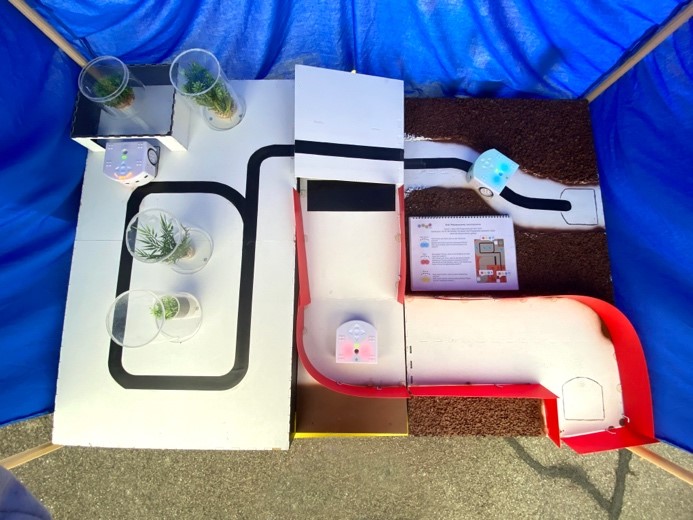
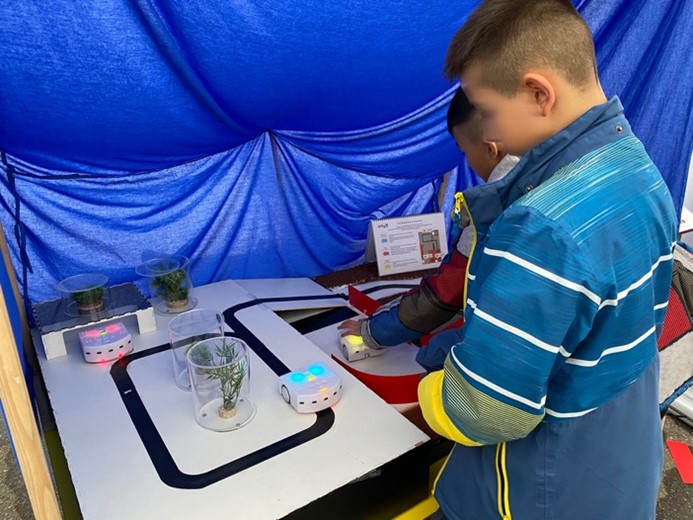
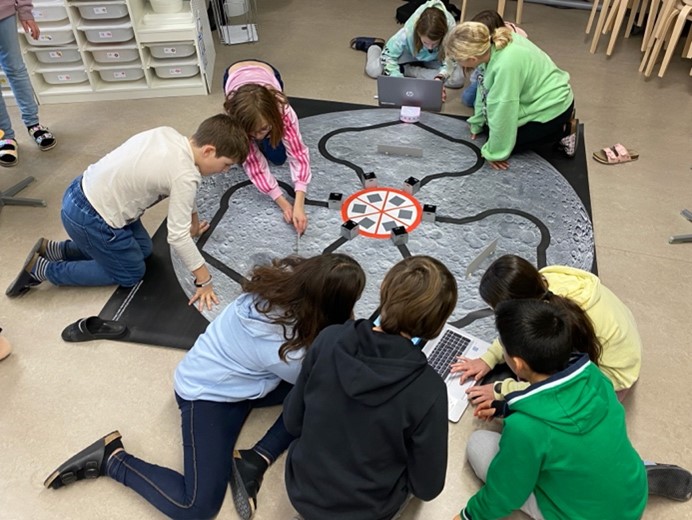
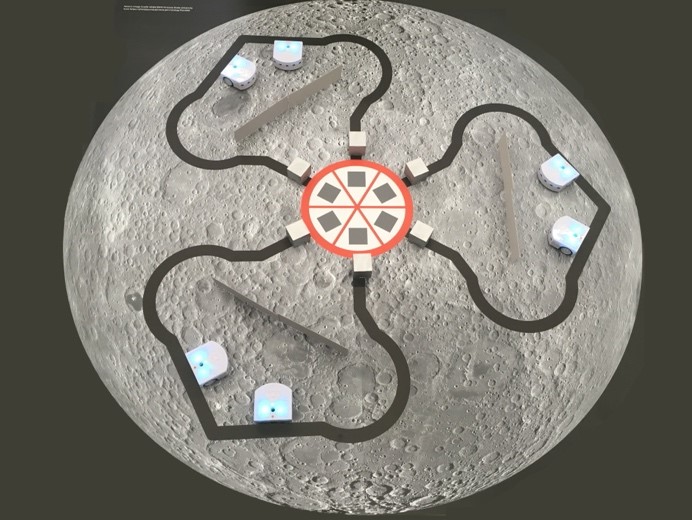
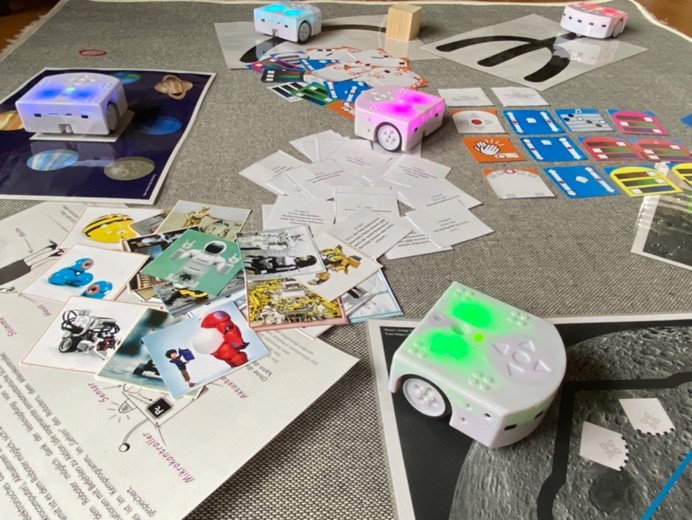
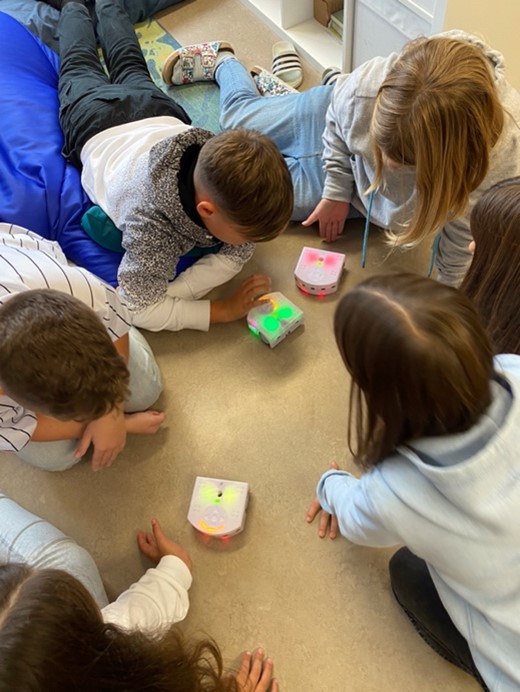
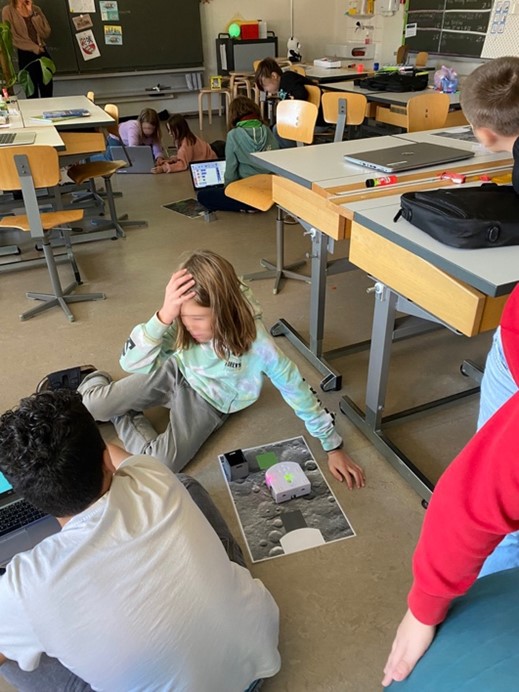
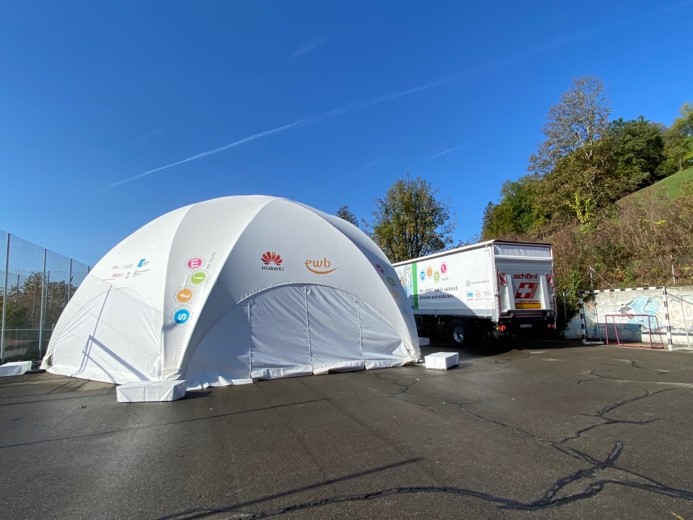
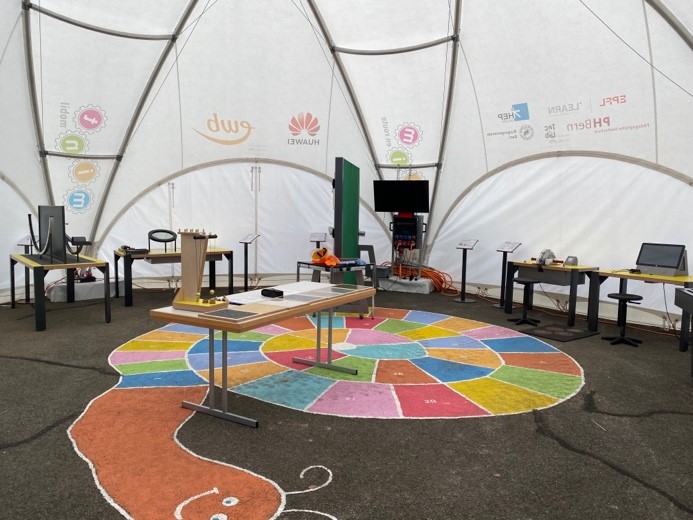
MINT mobil is an initiative by the Bildungs- und Kulturdirektion of the Canton of Bern aimed at addressing the shortage of skilled workers in technical fields. It targets students from third to sixth grade (cycle 2) and encourages them to explore STEM subjects—science, technology, engineering, and mathematics—through play-based experimentation. The program offers an immersive, week-long experience during which the regular timetable is ideally suspended. Students engage in hands-on activities that involve tinkering, exploring, failing, and persevering, ultimately building curiosity and pride in problem-solving. Since August 2021, the MINT mobil truck has toured schools in the canton, aiming to reach all schools by the 2027/2028 school year. The mobile learning environment includes a truck, a tent with 14 experimental stations, and 13 class boxes with materials. A special focus is placed on computer science and robotics, especially through the Mars Station in the tent and the Moon Mission class box, developed collaboratively by the EPFL Center LEARN and PHBern.
Objectives
The team of this research project aimed to evaluate and improve the “Mars Station” and “Moon Mission” modules of MINT mobil. It sought to understand student learning behaviors, assess cognitive and affective learning outcomes, refine educational materials, and explore the integration of arts into STEM education.
Method
The project followed four key phases. First, data was collected from 191 students (94 girls, 97 boys) and 13 teachers at nine schools via questionnaires, researcher booklets, interviews, and observations. This data focused on computational thinking, motivation, and problem-solving. In the second phase, the team conducted quantitative and qualitative analyses of learning outcomes. Third, they refined the teaching materials based on insights gained. Finally, the project team explored how to integrate arts into robotics to develop STEAM activities inspired by Bauhaus principles and digital art.
Results
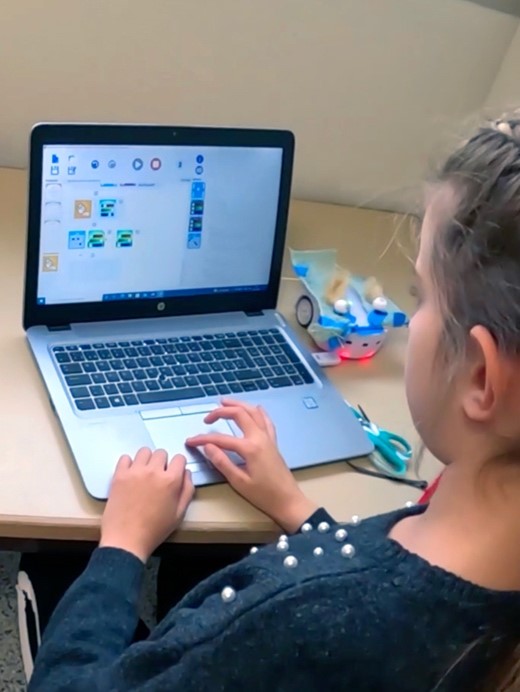
Students showed significant improvement in self-assessed computational thinking and robotics skills, with a high effect size (0.98), and girls improved equally to boys. Problem-solving shifted from guessing (-0.54 effect size) to structured methods such as trial-and-error (+0.54) and collaboration (+0.78). Motivation was high, with 84% of students wanting to continue programming. Teachers reported positive experiences, and the evaluation confirmed the learning impact and engagement potential of the interventions. These results underscore the project’s success in fostering both cognitive and emotional engagement in STEM topics.
Implemented Translation
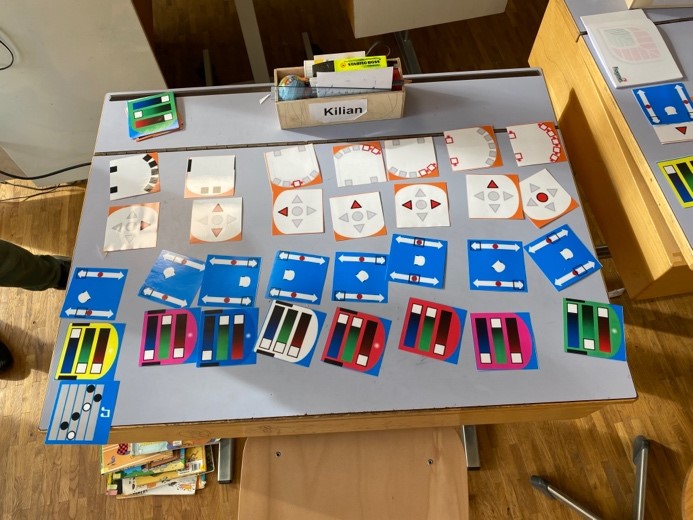
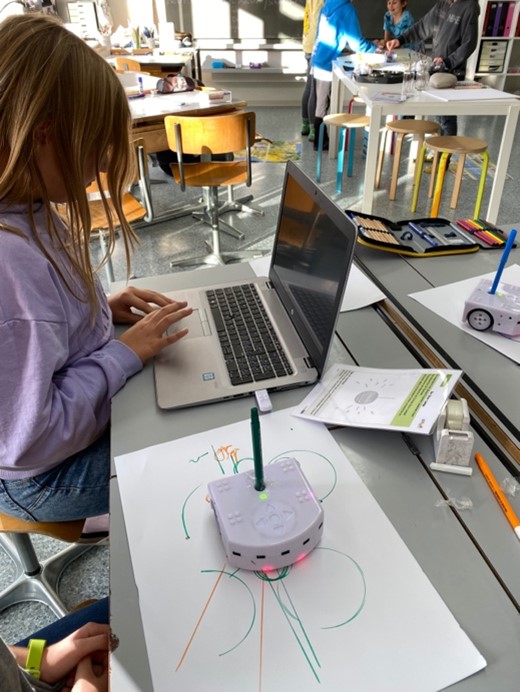
Research insights were directly applied to enhance MINT mobil’s educational offering. The Moon Mission module was revised into nine scaffolded units that progressively develop programming skills. Adjustments to teaching materials and the teacher dossier improved usability and alignment with learning goals. The intervention was embedded in a school week and supported by teacher training, ensuring practical classroom implementation. The integration of arts led to new robotics-based activities focused on movement, drawing, and kinetic art, offering alternative entry points for creatively inclined students. The project contributed to the long-term goal of increasing student interest in STEM. It also promoted gender-equitable learning gains and informed future curriculum development. By blending digital tools, creative tasks, and hands-on robotics, MINT mobil created a lasting and engaging learning experience.
Project Lead