Abstraction, the Missing Link in Early Computational Thinking Education
Advancing computational thinking: teaching abstraction and decomposition through problem-based, syntax-free programming.
Duration: January 2026 – December 2026
Status: Ongoing
Educational Level: Primary Level, Lower Secondary Level, Upper Secondary Level – Vocational Education, Upper Secondary Level – Grammar School Education, Tertiary Level
Topic: Digital Skills & Literacy, Digital Tools
Keywords: Abstraction, Notional Machine, Computational Thinking, Education, Beginners
Initial Situation
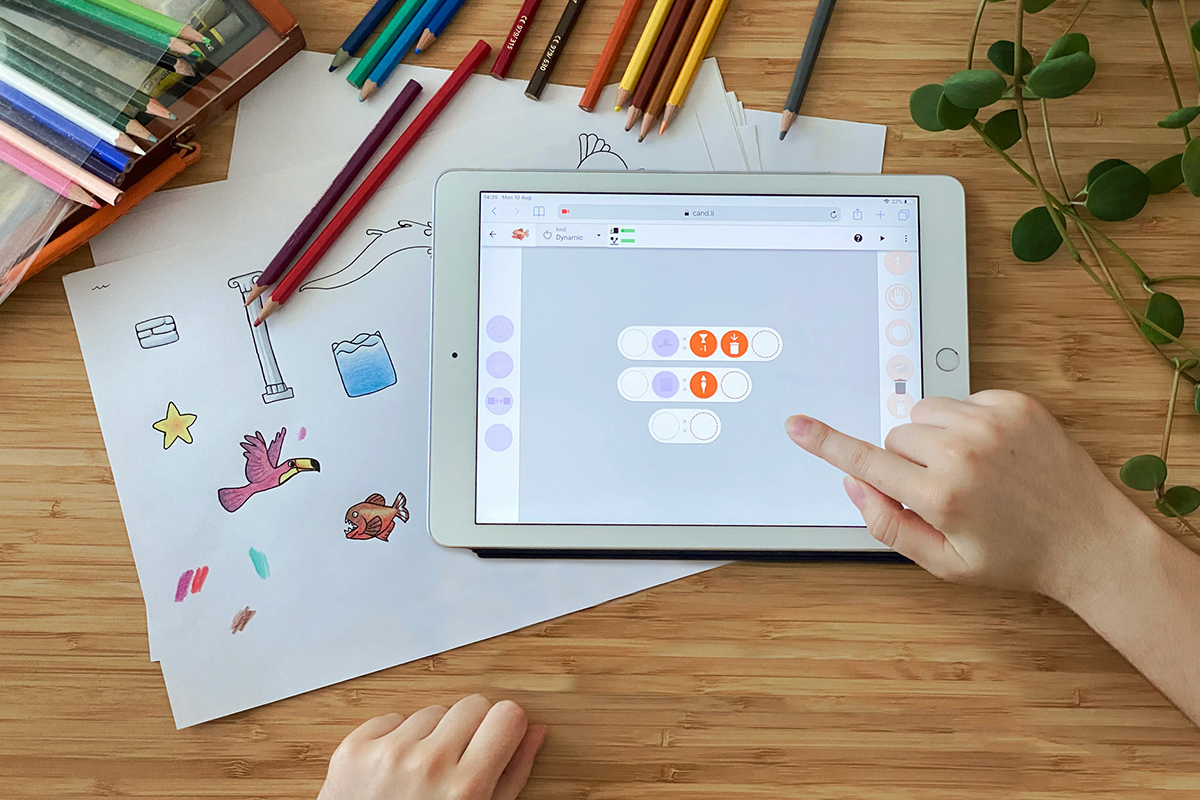
In today’s digital society, computational thinking (CT)—the ability to analyze problems, abstract relevant details, and develop systematic solutions—is increasingly vital, not only for professional success but also for informed civic participation. While visual and block-based programming tools like Candli, Thymio, or Scratch have made programming more accessible to beginners, they often emphasize simplicity over depth. As a result, learners struggle to grasp core CT concepts such as abstraction and decomposition, leaving them unable to transfer skills across contexts or programming paradigms. One key challenge is teaching students to navigate multiple levels of abstraction, a skill essential for effective problem-solving but cognitively demanding for novices. Without a clear mental model of how programs execute—known as a “notional machine”—students face persistent misconceptions and limited programming fluency. This project addresses the gap by developing teaching materials and software features that explicitly scaffold abstraction and decomposition, using the syntax-free programming environment Candli and Prograblock. The goal is to empower secondary and vocational school students from diverse backgrounds to build accurate mental models and develop flexible CT skills through a problem-based, game-oriented approach.
Objectives
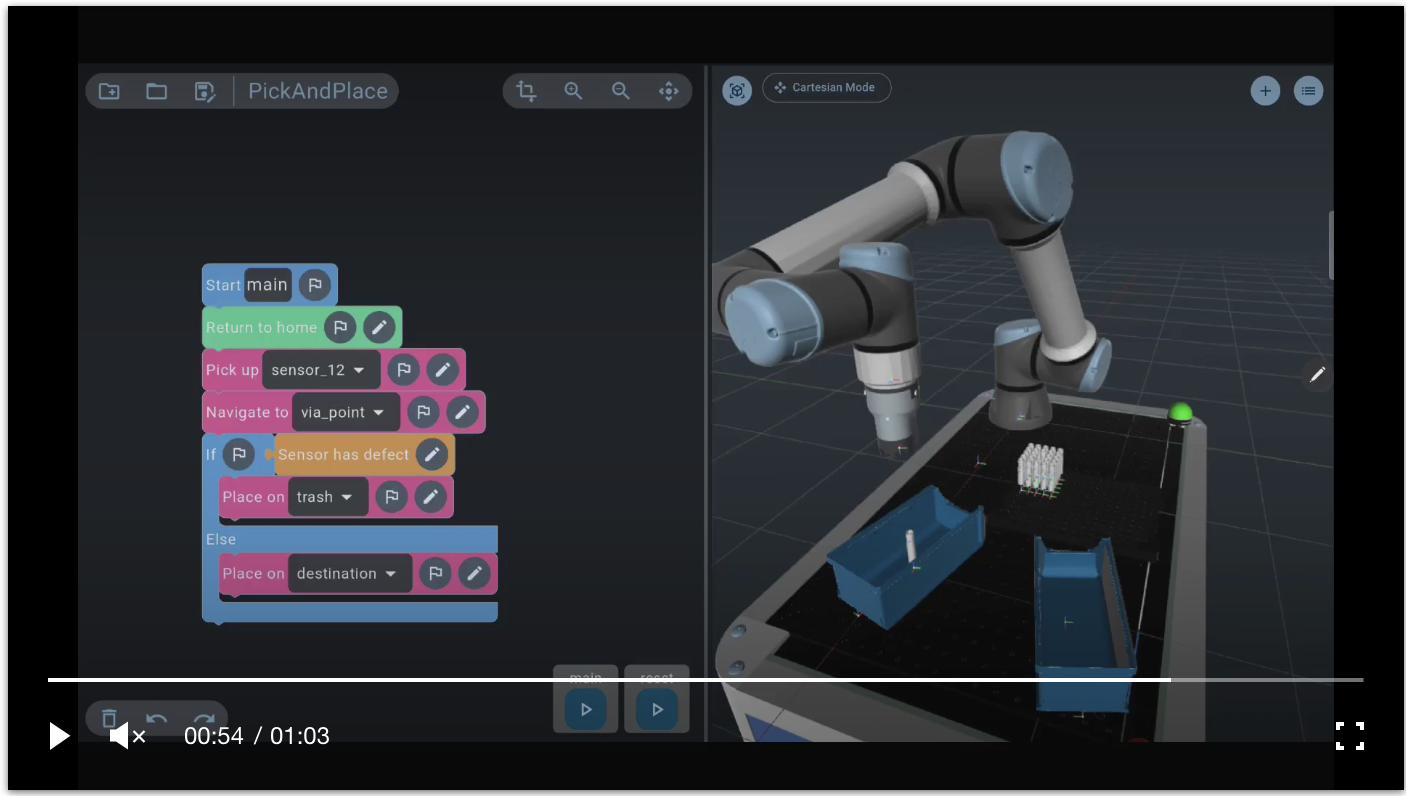
Our project develops and validates a teaching framework, curricula, and software tools that explicitly foster abstraction and decomposition in beginners. Using Candli (game programming) and Prograblock (robotics), we design materials aligned with Lehrplan 21 and PER, prototype user interfaces for “sliding abstraction,” and test with secondary students. Results will guide integration into commercial and educational platforms for broad, lasting impact.
Method
We use a user-centered, iterative research approach. First, specification workshops with users to identify challenges in learning abstraction. Based on these, we co-design a problem-based teaching framework and 5-session curricula for Candli and Prograblock, combining top-down decomposition and bottom-up abstraction. Software prototypes will extend both platforms with new abstraction mechanisms. Iterative testing in Swiss classrooms will validate the materials and refine both curricula and tools. Evaluation will combine qualitative analysis of student solutions with measures of conceptual understanding.
Planned Translation
Translation into practice is built in from the start. Through the Swiss National EdTech Testbed Program and networks such as BeLEARN, Educamint and Roteco, curricula and tools will be piloted directly in schools. Candli’s established teacher network ensures rapid classroom uptake. Prograblock will be adapted for vocational and industrial contexts, extending its use beyond industry into education. After validation, the teaching framework, materials and new user interfaces will be integrated into Candli’s and Prograblock’s commercial platforms, guaranteeing sustainability and ongoing support for teachers and learners. The project will close a critical gap in computational thinking education by making abstraction and decomposition accessible to beginners. We expect improved student ability to transfer programming knowledge across contexts and to build accurate mental models of program execution. For teachers, the project provides ready-to-use curricula and tools aligned with national curricula (Lehrplan 21, PER). For research, it generates evidence on effective scaffolding of abstraction. Impact will be measured through classroom trials, student performance on problem-solving tasks, qualitative analysis of learning processes, and teacher feedback.