
Simulation
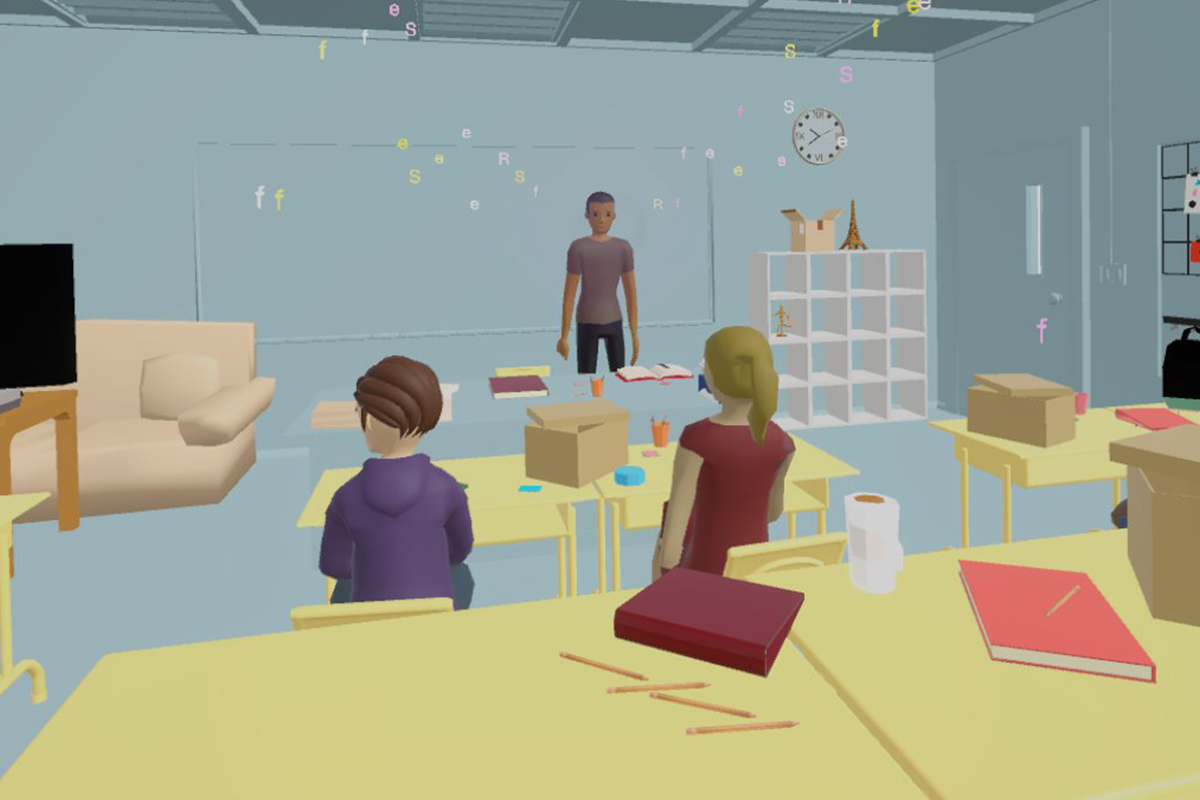
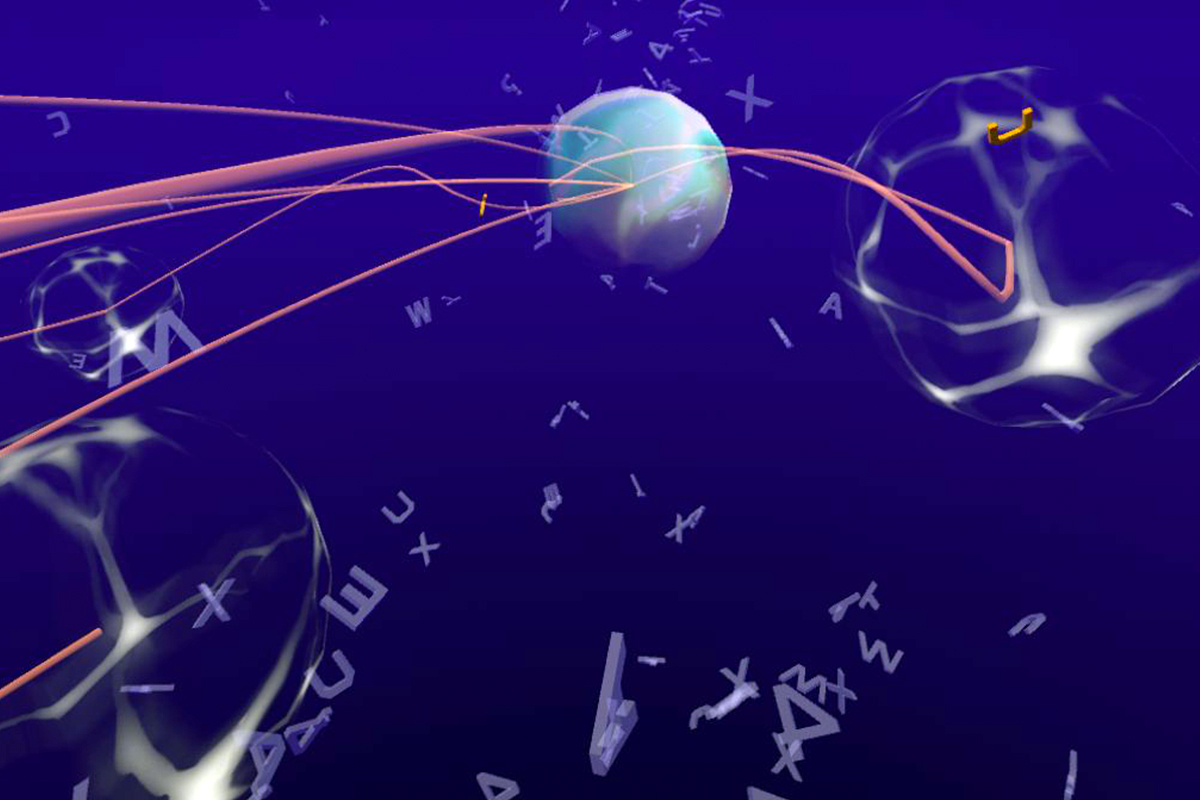
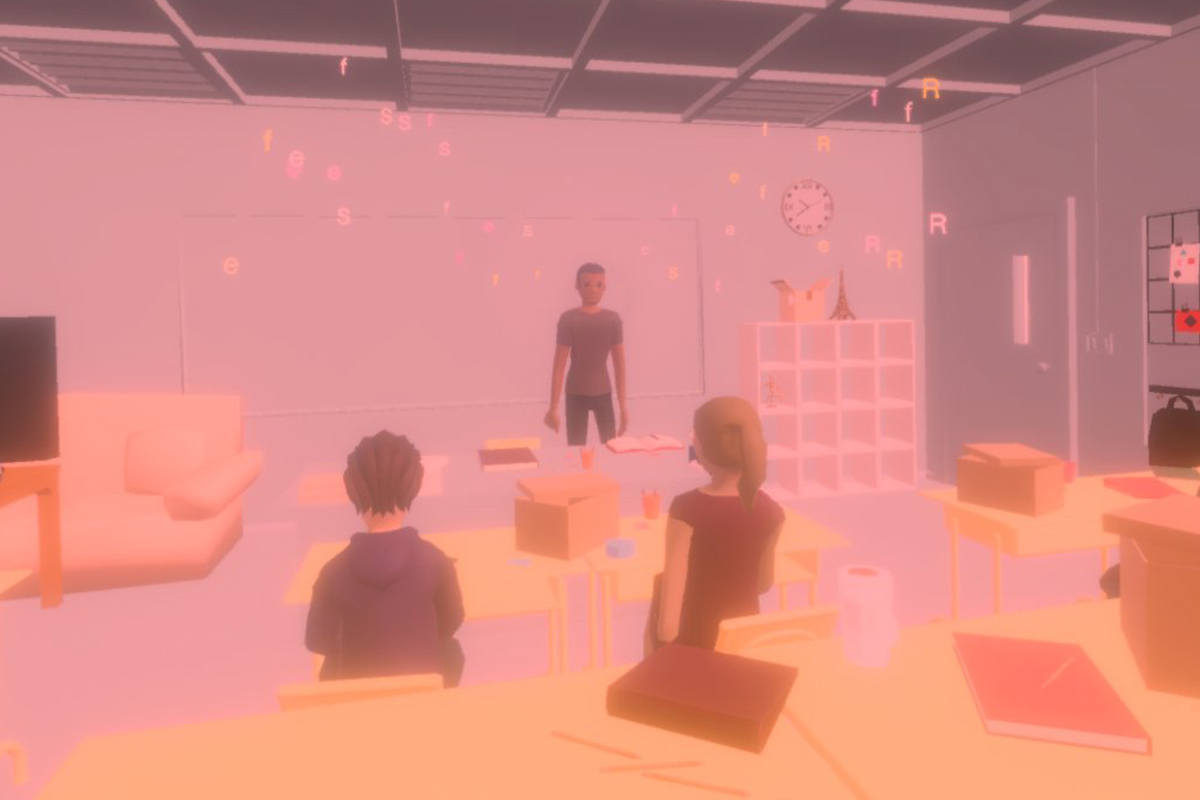
With the help of this ADHD VR simulation, teachers, special needs teachers, ADHD coaches, social workers, line managers, trainers and others can experience ADHD symptoms first-hand, thereby deepening their understanding of ADHD in school and work settings.
Insights into the ADHD VR Simulation


Questions about the ADHD VR Simulation
Participatory Development Process
The ADHD VR simulation was developed using a scientifically grounded, participatory approach. Rather than recreating ADHD from an outside perspective, people with ADHD were systematically involved throughout the entire process—not only during final testing, but from the very beginning. The guiding principle was “Nothing about us without us”: people with ADHD are regarded as experts in their own experiences, whose knowledge is essential for creating a simulation that authentically reflects their reality.
This approach enhances authenticity because the characteristics depicted are based on systematically collected experiences of people with ADHD rather than on assumptions or stereotypes. It also makes the development process empirically verifiable and aligns with the principles of neurodiversity by involving people with ADHD as co-creators. In this way, the simulation reflects real ADHD experiences. The perspectives of potential users were also taken into account.
Structured Validation Sessions
The accompanying study brought together two perspectives: the experiences of people with ADHD, gathered through structured validation sessions, and the views of future users, collected through qualitative expert interviews with education professionals. Early prototypes were tested with children and young people with ADHD as well as potential users.
The children and young people provided structured feedback on whether the simulated experiences corresponded to their own perceptions. Based on this feedback, the VR development team adapted the application. BeLEARN was responsible for project management and the expert interviews, while the academic research team developed the validation protocol, conducted the validation sessions and prepared the interview guide.
Closely Aligned with the Experiences of People with ADHD
The accompanying research aimed to assess the authenticity of the simulation from the perspective of people with ADHD, evaluate its relevance to everyday school life, examine its usability for professionals and derive recommendations for its further development.
The ADHD VR simulation is therefore not a product developed merely about ADHD, but one created together with people with ADHD—tested iteratively, evaluated empirically and gradually brought closer to their real-life experiences.
Starting Point: Difficulty Filtering Auditory Stimuli in ADHD
The sound design of the classroom scene specifically recreates the difficulties people with ADHD may experience when filtering auditory stimuli. It is based on research showing that people with ADHD can have difficulty distinguishing relevant from irrelevant sounds and that salient stimuli can make it particularly challenging to regulate attention (Grane et al., 2016). However, not every sound is equally distracting; certain acoustic characteristics are particularly important.
Particularly Distracting Sounds
Sudden, unpredictable sounds, such as an emergency siren or a slamming door, can be particularly distracting because they trigger an immediate shift in attention (Grane et al., 2016). Meaningful sounds containing speech—such as conversations in the corridor or children’s voices during a break—can be similarly disruptive because the semantic processing of language occurs automatically and is difficult to suppress (ADDitude Magazine, n.d.-a).
Another category includes bodily sounds such as chewing, blowing one’s nose or sniffling. These have a high potential to trigger misophonia and may provoke strong emotional reactions, including anger, anxiety or disgust, in a considerable proportion of people with ADHD (Baird, 2023). Repetitive sounds, such as tapping a pen or clicking a ballpoint pen, can also involuntarily capture attention and become an all-consuming focus (ADDitude Magazine, n.d.-b).
Less Disruptive Sounds
By contrast, constant and predictable background sounds without semantic content—such as steady road traffic or birdsong—tend to be less distracting. They may resemble a white-noise effect, which can even support cognitive performance and memory in children with ADHD (Söderlund et al., 2016; Castellanos et al., 2024).
Research also suggests that white noise can improve cognitive performance in children with low levels of attention, whereas it may have the opposite effect on children with average or above-average levels of attention (Helps et al., 2014). Self-generated and controllable sounds, such as those produced while drawing or searching through one’s pencil case, are also generally less disruptive because they are self-controlled and related to the task at hand (ADDitude Magazine, n.d.-c).
Implementation in the ADHD VR Simulation: The Four-Level Intensity System
The increased listening effort required by people with ADHD under distracting conditions has also been demonstrated empirically (Strait et al., 2020). Based on this evidence, a four-level intensity system (levels 0–3) in Scene 1 of the ADHD VR simulation allows users to experience difficulties with filtering auditory stimuli.
At each level, distracting sounds become increasingly prominent in relation to the teacher’s voice until focused listening becomes virtually impossible. In this way, users experience first-hand that attention difficulties associated with ADHD are not a matter of willpower, but a neurological reality—and how exhausting it can be to continuously resist distracting sounds.
Sources
ADDitude Magazine. (n.d.-a). Sound sensitivity and ADHD: How noise affects focus. Retrieved August 19, 2026, from https://www.additudemag.com/sound-sensitivity-adhd-noise-distractions/
ADDitude Magazine. (n.d.-b). ADHD and noise sensitivity: Why certain sounds are overwhelming. Retrieved August 19, 2026, from https://www.additudemag.com/adhd-noise-sensitivity-sound-overload/
ADDitude Magazine. (n.d.-c). How to manage sound sensitivity with ADHD. Retrieved August 19, 2026, from https://www.additudemag.com/managing-sound-sensitivity-adhd/
Baird, A. (2023, November 15). Misophonia and ADHD: Understanding the connection. Verywell Mind. https://www.verywellmind.com/misophonia-and-adhd-8351626
Castellanos, F. X., Merrill, A. M., & Alport, E. (2024). Meta-analysis of the effects of white and pink noise on cognitive performance in children and young adults with and without ADHD. JAMA Network Open, 7(3), e241056. https://doi.org/10.1001/jamanetworkopen.2024.1056
Grane, V. A., Brunner, J. F., Endestad, T., Aasen, I. E. S., Kropotov, J., Knight, R. T., & Solbakk, A. K. (2016). ERP correlates of proactive and reactive cognitive control in treatment-naïve adult ADHD. PLoS ONE, 11(7), e0159833. https://doi.org/10.1371/journal.pone.0159833
Helps, S. K., Bamford, S., Sonuga-Barke, E. J. S., & Söderlund, G. B. W. (2014). Different effects of adding white noise on cognitive performance of sub-, normal and super-attentive school children. PLoS ONE, 9(11), e112768. https://doi.org/10.1371/journal.pone.0112768
Söderlund, G. B. W., Sikström, S., Loftesnes, J. M., & Sonuga-Barke, E. J. (2016). The effects of background white noise on memory performance in inattentive school children. Behavioral and Brain Functions, 12(1), 10. https://doi.org/10.1186/s12993-016-0095-y
Strait, D. L., Chan, K., Ashley, R., & Kraus, N. (2020). Increased listening effort in adult attention deficit hyperactivity disorder. Journal of Speech, Language, and Hearing Research, 63(8), 2609–2619.