Inclusive Digital Competence Framework
Development of an inclusive digital competence framework to promote digital inclusion and equal opportunity for people with disabilities.
Duration: January 2024 – December 2024
Status: Completed
Educational Level: Tertiary Level
Topic: Digital Skills & Literacy
Keywords: Digitised Teaching Modules, Metacognition
Initial Situation
With the advance of digitisation, the digital divide within the population is deepening progressively. People with disabilities, in particular, encounter barriers in the digital space that are often difficult to overcome. Yet existing digital competence models do not sufficiently address this group.
Follow-up Project
In the follow-up project AppDigCompINC, building on the previous project, the individual starting points and needs of the participants will be systematically recorded in order to adapt the test setting in a barrier-free and fair manner.
Objectives
The project “Inclusive Digital Competence Framework (DigCompINC)” aims to identify digital competences for people with disabilities and to develop an inclusive competence model. This approach is intended to enable all individuals, regardless of physical or cognitive impairments, to access digital resources and educational opportunities on an equal footing.
Method
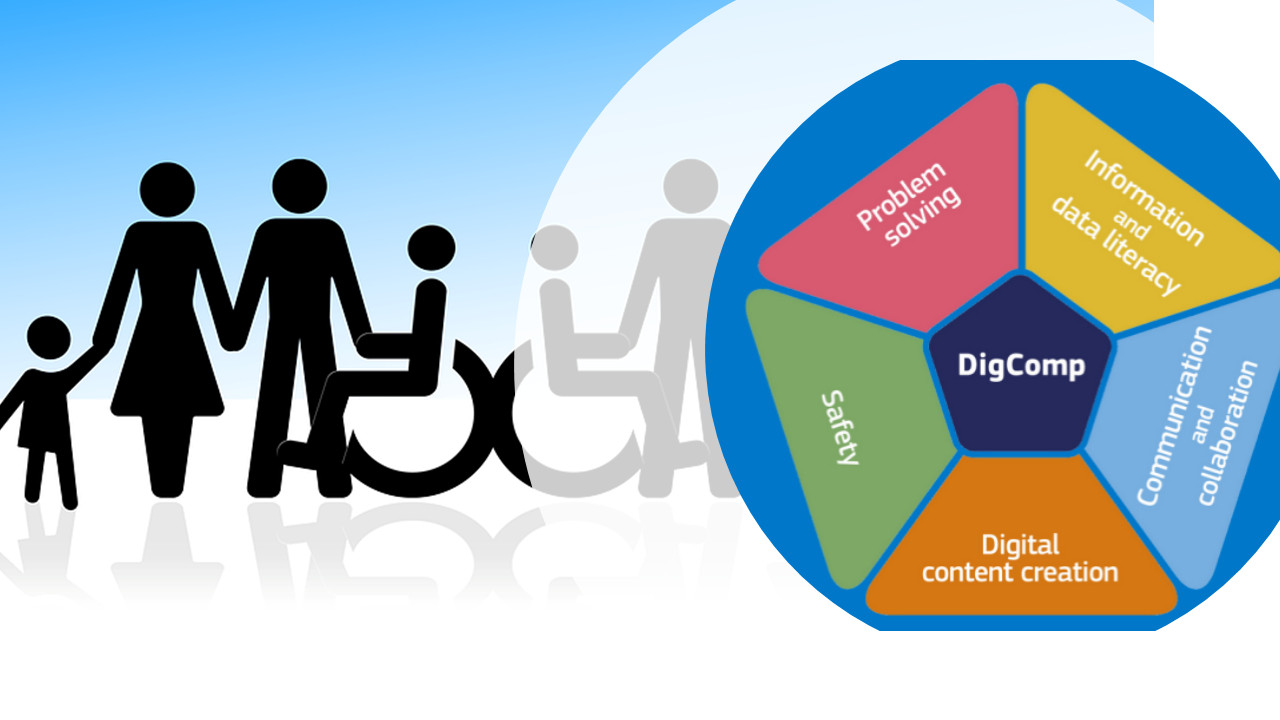
The project builds on collaboration with persons with lived experience and practitioners/experts in the field to gain a comprehensive understanding of the specific challenges and competences. Drawing on existing competence models and our own data collection, core digital competences for people with disabilities are defined and identified in the areas of information and data literacy, communication and collaboration, digital content creation, safety and problem solving for people with disabilities.
Results
In the first project phase, digital competence profiles for people with disabilities were developed, based on practical workplace situations in the primary labour market. The process included two workshops with practitioners and higher education experts, as well as supplementary interviews with persons with disabilities. In the interviews, digital scenarios were simulated to identify relevant competences and, on that basis, design teaching and learning offerings. The multi stage procedure enabled a comprehensive survey from the perspectives of stakeholders and persons with disabilities, forming the foundation for DigCompINC. The exploratory approach led to the development of a bespoke assessment procedure that accounts for the heterogeneous starting points of people with disabilities.
Implemented Translation
The DigCompINC is employed at the PHBern in the training of people with disabilities as inclusion professionals. In a follow up project the assessment procedure—comprising a differentiated pre assessment phase, a work situation based assessment, and a competence level measuring evaluation phase—will be further tested and scaled up for application to larger populations. The DigCompINC project closes a central gap in existing competence models by defining digital competences for people with disabilities and developing an inclusive framework. In doing so, it promotes equal access to digital resources and educational opportunities. The practice oriented survey and the assessment procedure enable individual competence measurement and targeted learning offerings. In the long term, the model contributes to reducing the digital divide and supports professional participation as well as scaling up to larger target groups.


