Etuna: Structure and Visualisation in the Classroom
A clear structure gives children guidance and a sense of security. When they know what will happen, when and where, they can focus their attention on learning instead of searching for stability. Elements of the TEACCH approach provide a simple, practical tool for everyday use that offers particular support to pupils.
Key Information
Subject/ Subject Area: All subjects
School Level(s): Cycles 1, 2 and 3
Focus: Distraction, Memory, Daydreaming
Implementation
The TEACCH approach was originally developed for people with autism and provides a toolkit for structuring and visualising everyday activities. Many of its elements also support pupils with ADHD. They often experience difficulties with attention, planning, impulse control and working memory—in other words, with executive functions. A structured and predictable environment provides some of this external guidance, reduces the demands placed on the child and creates more space for learning.
Clear spatial, time and task structures, visual daily schedules, unambiguous instructions, predictable routines and fewer distractions are particularly effective. This makes lessons more predictable and helps children develop confidence and independence.
Practical ideas
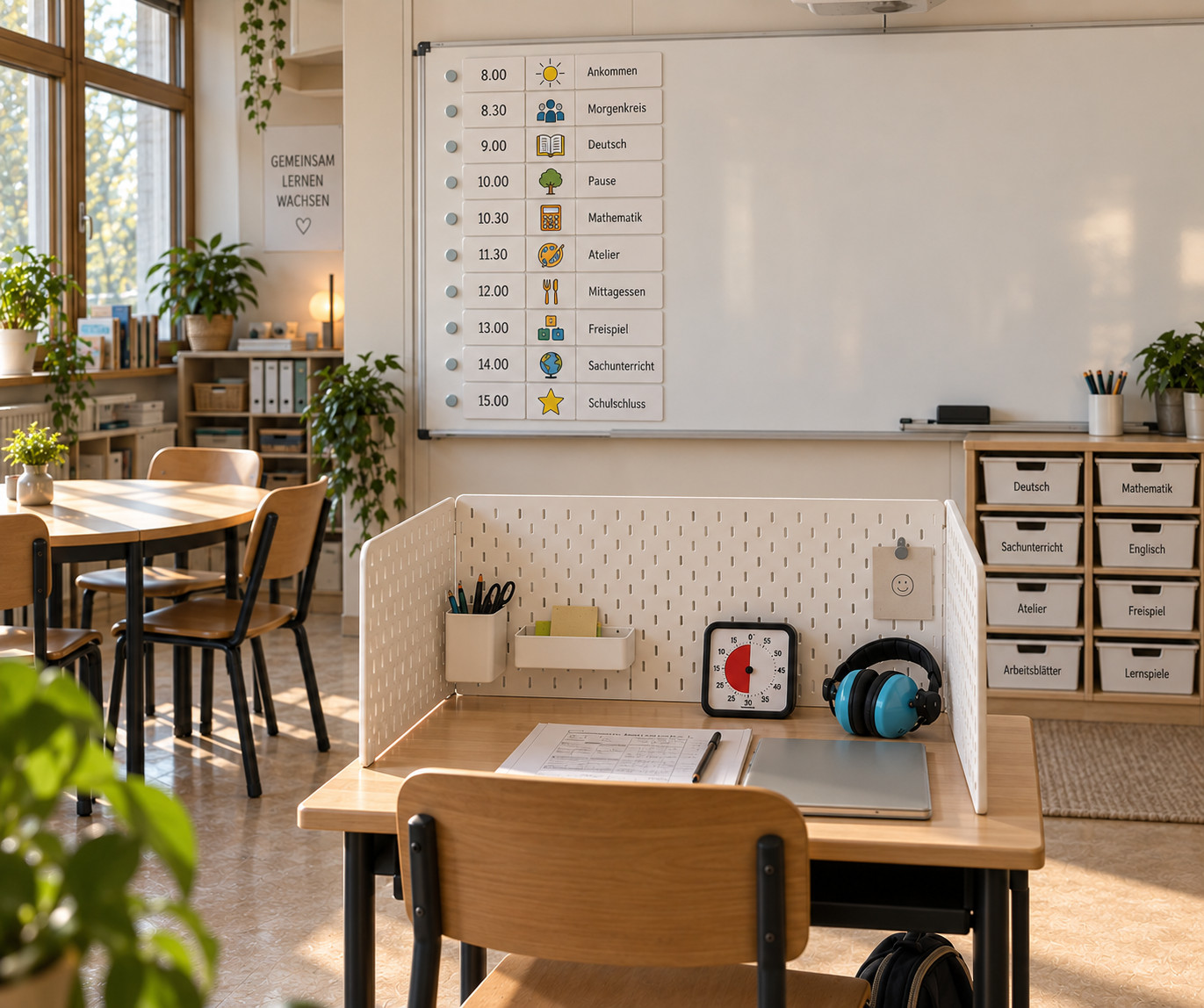
- A clearly organised classroom provides orientation. Pupils know where discussions take place, for example at a round table, and where they can work quietly. The arrangement of the desks reduces distractions.
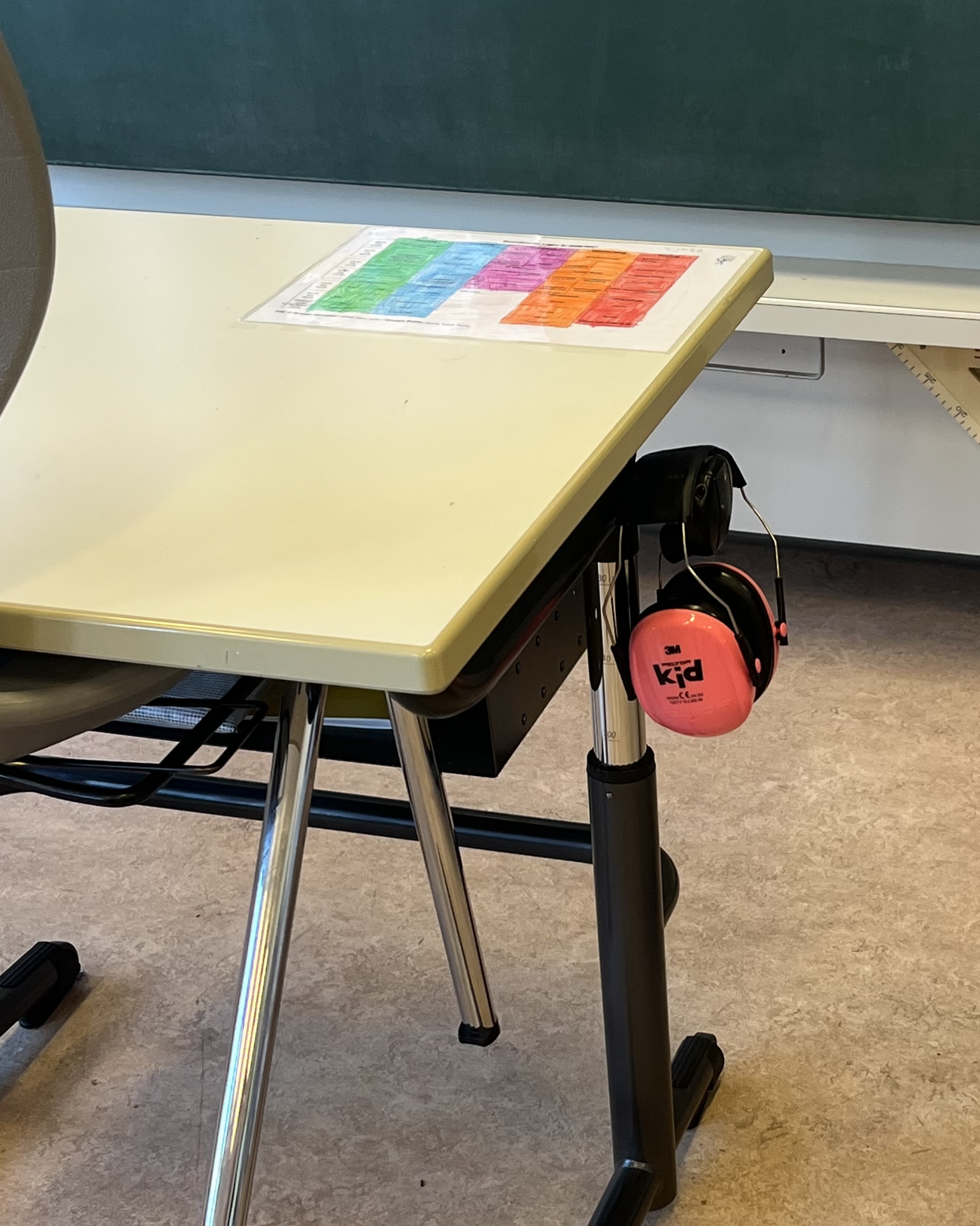
- An appropriate seating arrangement and hearing protectors at the workstation reduce visual and auditory stimuli.
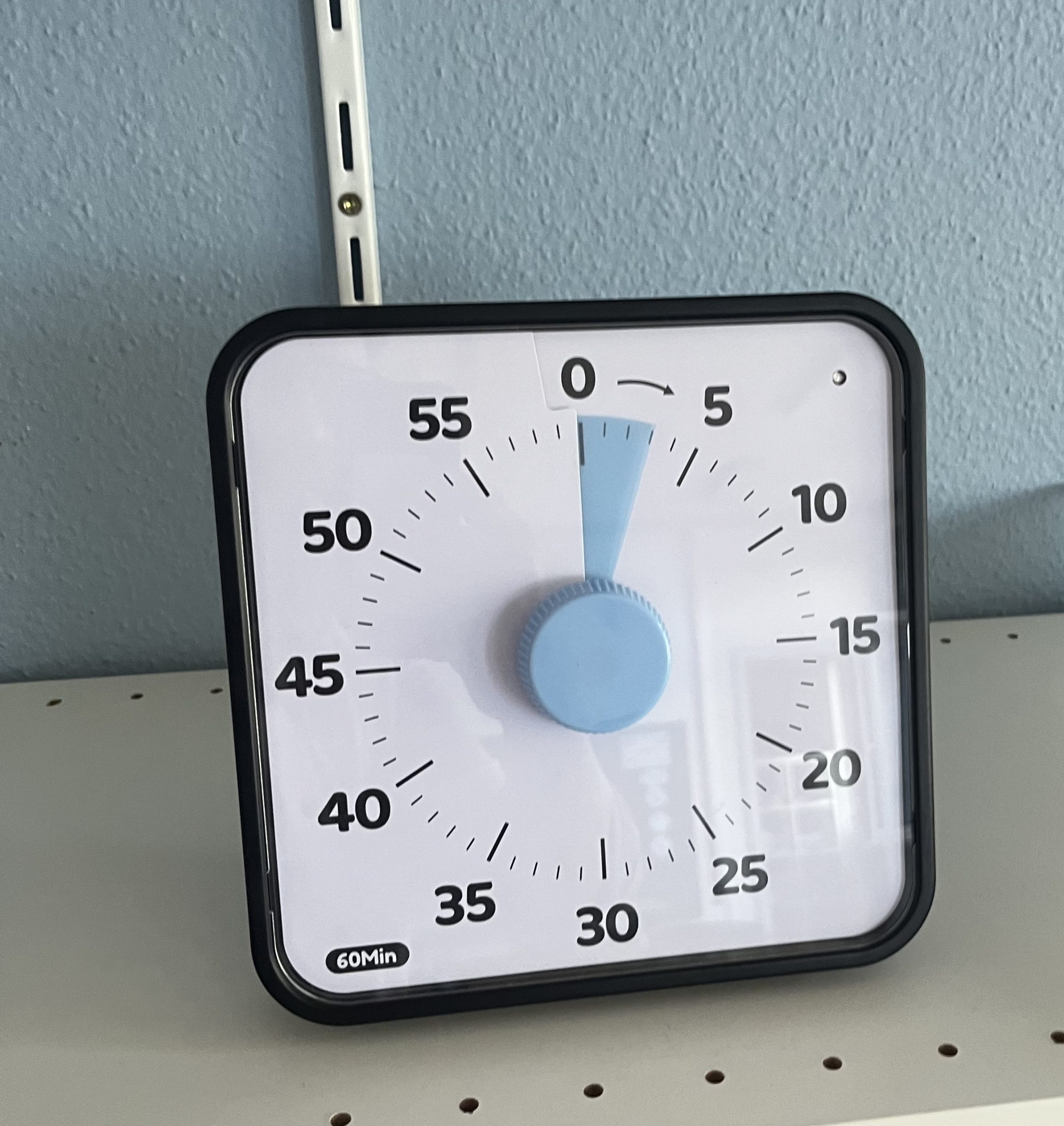
- Timers provide time orientation and show how long a task will take.
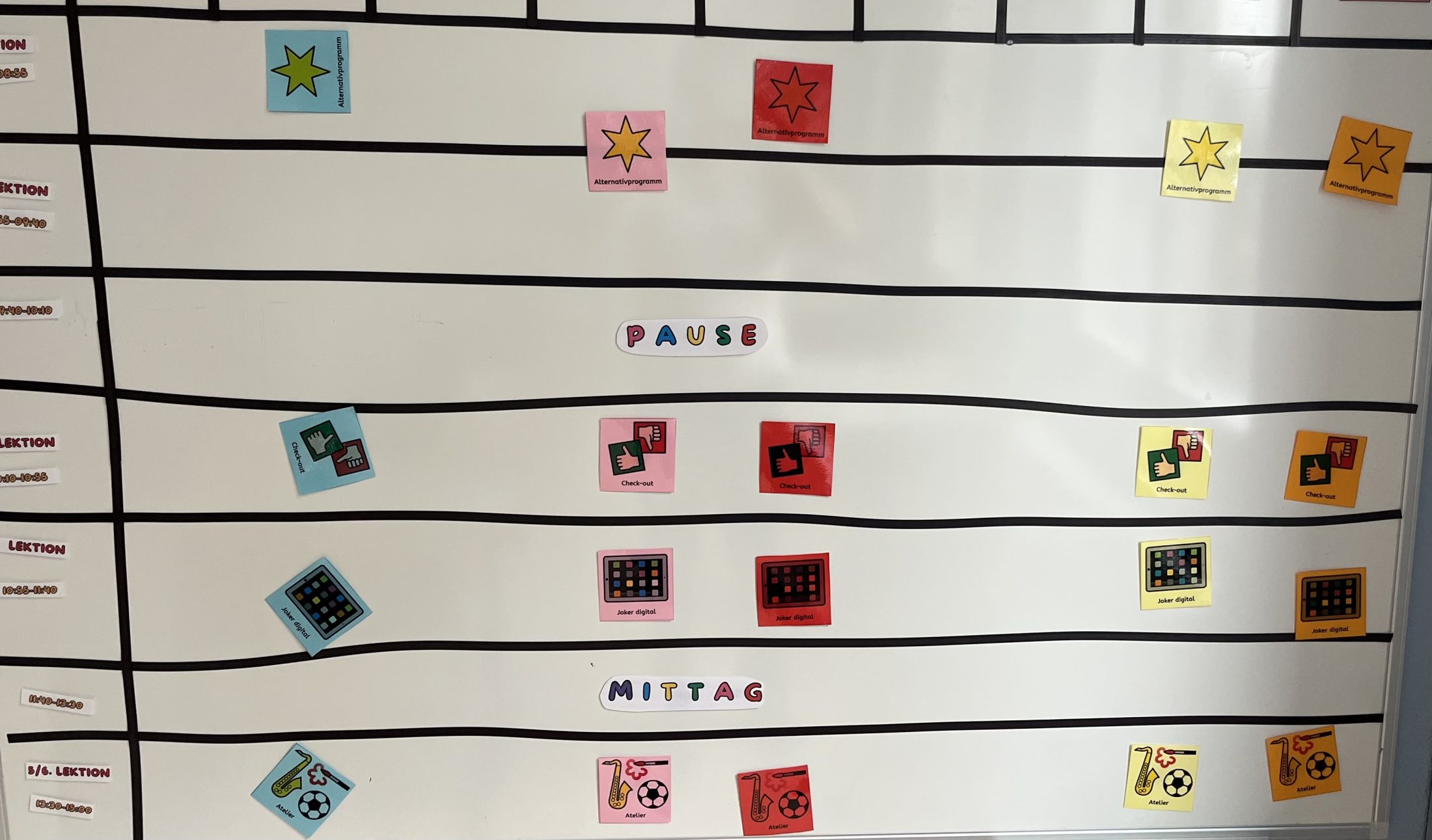
- Visual daily schedules make routines visible. Pupils position their own pictograms and are given choices, which strengthens their ability to organise themselves.

Material
Pictograms, privacy screens, timers, whiteboard or blackboard.