Peerfeedback
Children learn not only from teachers but also from each other. When students learn to give each other targeted and appreciative feedback, this strengthens not only the classroom climate but also the capacity for self-reflection. Peer feedback is thus more than a method – it is a building block for a learning culture in which everyone is visible.
Key Information
Subject/ Subject Area: Cross curricular, Organization / Classroom Management
School Level: Cycle 1 and 2
Implementation
Children can learn to give each other targeted and appreciative feedback. With simple sentence starters such as ‘I thought it was good that…’ or ‘I observed that you…’, feedback becomes a learnable competency. This strengthens not only the recipient but also the one giving feedback, because they learn to look carefully and to name the positive. At the same time, teachers can use the same methods to collect structured feedback from the class and continuously adapt teaching.
Concrete ideas for peer feedback:
- Feedback slip: Children write a short feedback note to a classmate after group work or a presentation.
- Anonymous thank-you box: Children drop a slip with a positive observation about another child into a box weekly.
- Weekly compliment in the circle: Each child says something positive about another child in turn.
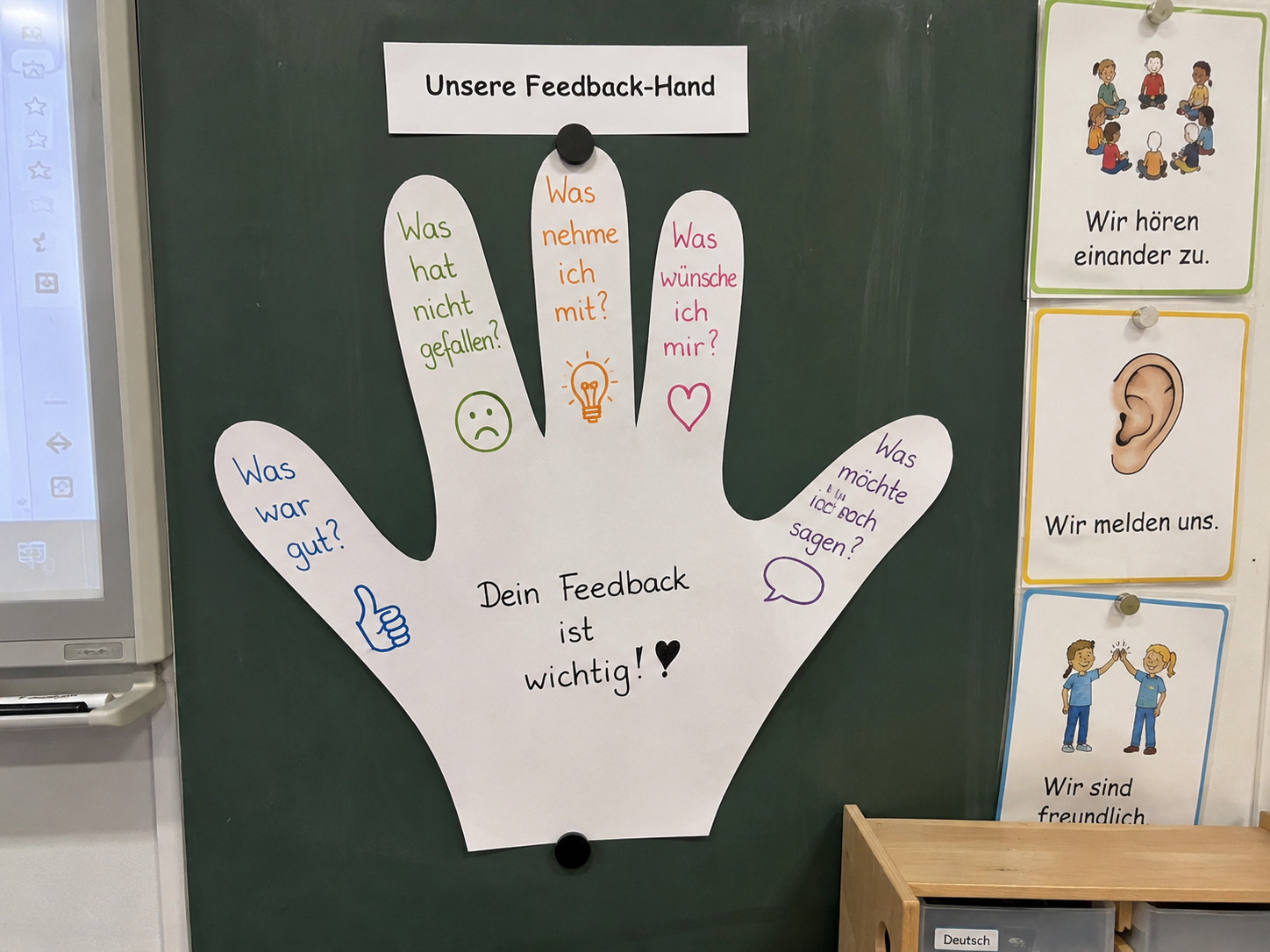
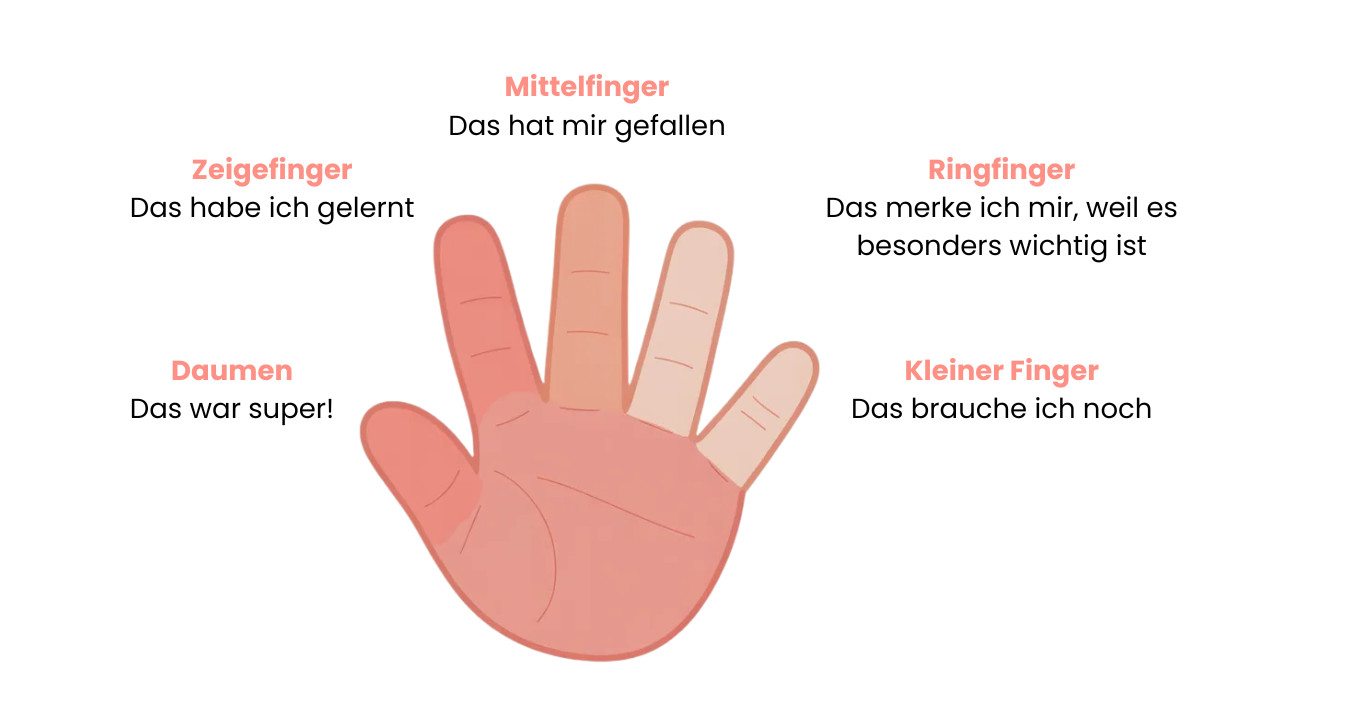
- Feedback hand: Each finger represents a statement, for example ‘What was good?’, ‘What didn’t work?’, ‘What do I take away?’. Simple and low-effort, usable from Cycle 1.
- Mood barometer: Children indicate daily how they are feeling and how the lesson was for them.
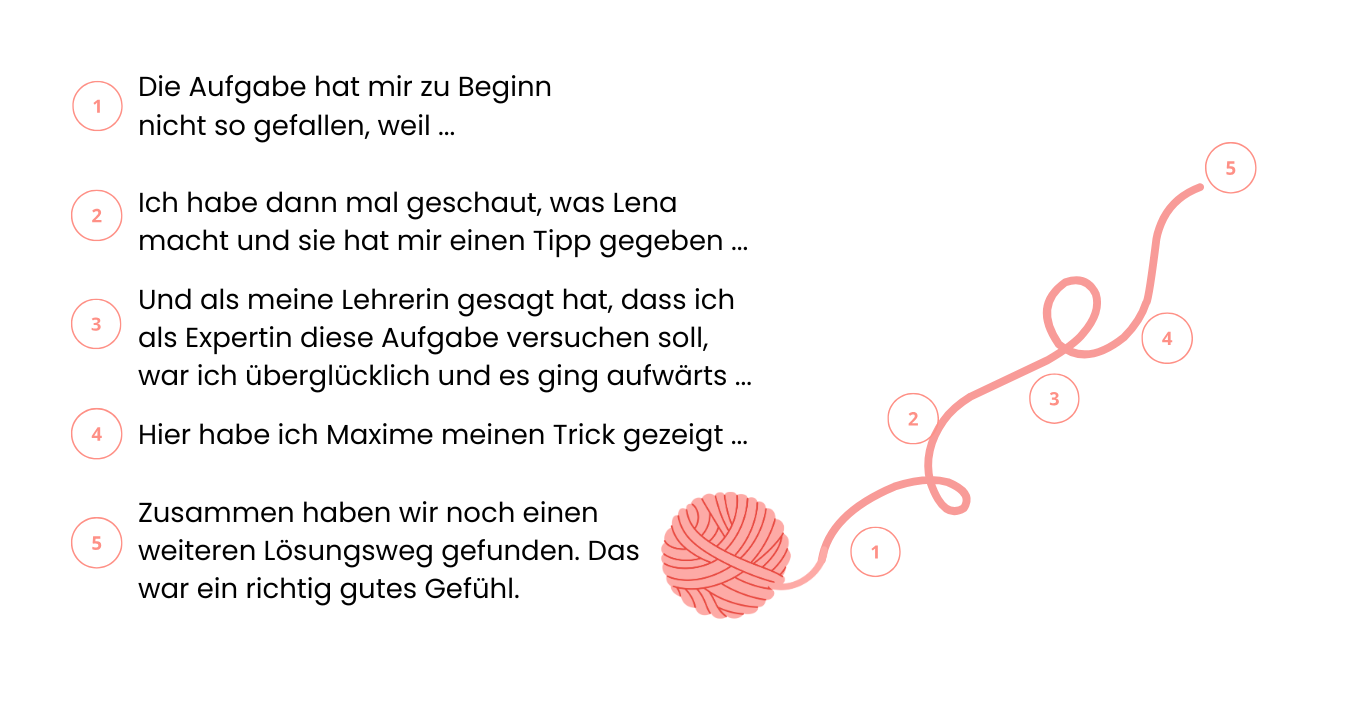
- Wool thread method: Children use a wool thread to represent feelings and learning steps, suitable for longer learning processes.
Material
Post-its, pens, wool thread and exercise books
References:
After: Selin Güler, primary school teacher and Translationmanager at BeLEARN