Positive Feedback
Positive feedback is more effective than general encouragement. Specific feedback shows the child exactly what was noticed and makes the behaviour easier to repeat. “I noticed that you started right away” says more than “Great job.”
Key Information
Subject/Subject Area: Organization / Classroom Management
School Level: Cycles 1 and 2
Implementation
Feedback in Everyday Classroom Practice
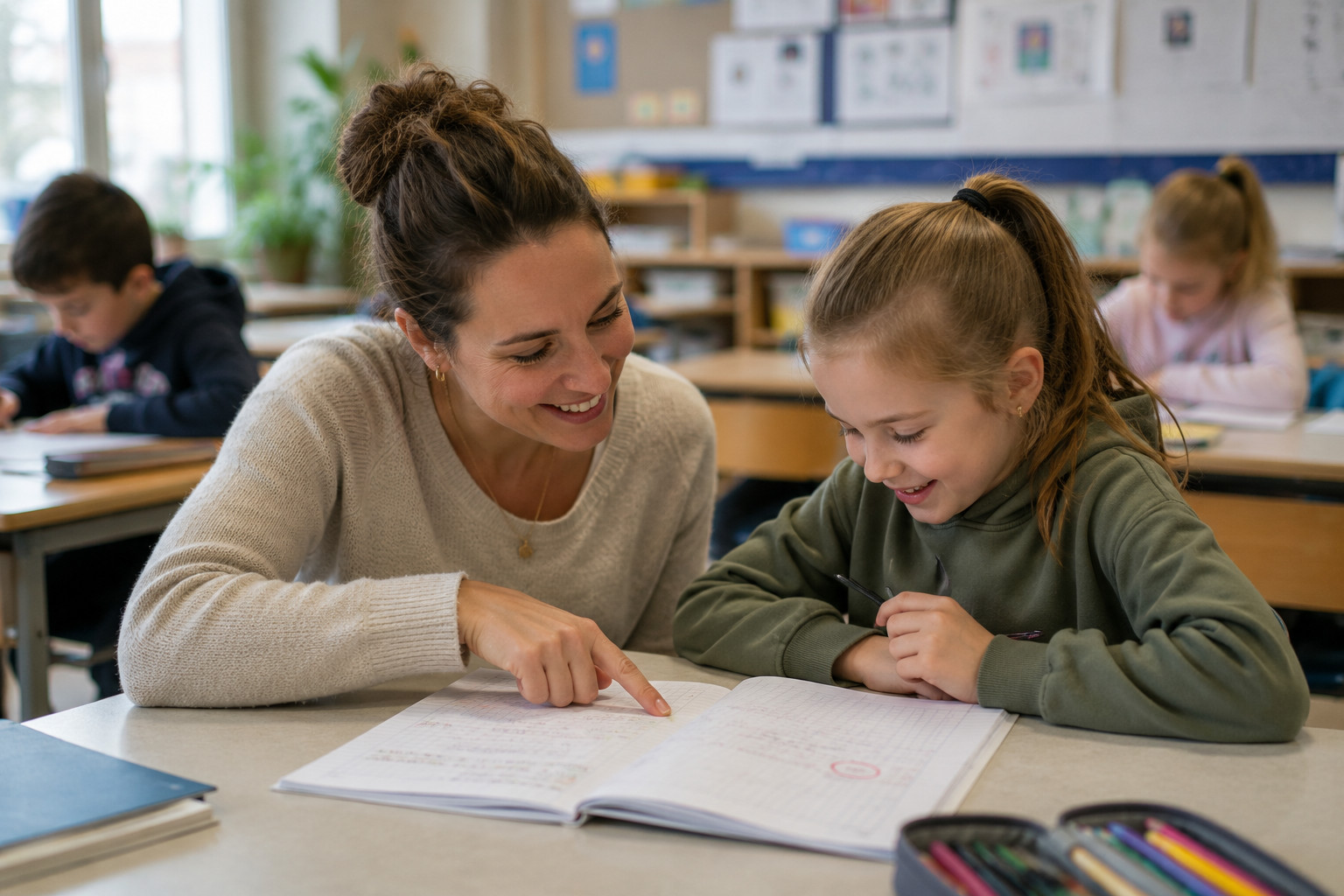
Feedback is one of the most effective tools a teacher can use, but only if it is specific, timely, and credible. General praise such as “well done” or “great job” quickly loses its impact because children don’t understand what exactly they did right and therefore can’t repeat it. Specific feedback, on the other hand, makes visible which behavior or performance was noticed and simultaneously strengthens self-image.
Concrete examples from everyday school life:
- “I saw that you started right away today – that helped the whole group.”
- “You explained to your classmate how to do it – that’s real teamwork.”
- “I noticed that you stayed calm today even though it was noisy. That’s not easy.”
- “You finished your task all the way through, even when it got difficult.”
- “I saw that you cleaned up without me having to say anything.”
- “You asked a question today that helped everyone move forward.”
- “I noticed that you comforted someone – that’s something special.”
It’s important to use different channels. Verbal praise in front of the class can be motivating for some children but uncomfortable or even stressful for others, especially if they experience attention as pressure. A Post-it on the desk, a short handwritten note in the notebook, or a quiet personal comment while passing by can be just as effective – often even more so, because they are private and direct.
Teachers who vary their feedback regularly and intentionally reach more students and send the message: : I see you as an individual, not just as part of the group.

Material
Kein Material nötig.
References:
After: Selin Güler, Primarschullehrerin und Translationsmanagerin bei BeLEARN
Source: Southern New Hampshire University (2020). The Power of Feedback. A Synopsis of Hattie & Timperley (2007). CC BY-SA 4.0. https://www.snhu.edu/-/media/files/pdfs/learning-resources/the-power-of-feedback.ashx and Hattie, J. (2013). Lernen sichtbar machen. Schneider Verlag Hohengehren.